
Are you struggling with sustainability goals for your HDPE products? You know recycling is key, but traditional methods often degrade quality and limit reuse. This makes achieving a truly circular economy feel impossible, which can impact your brand’s green credentials and bottom line.
Achieving true sustainability with HDPE relies on closed-loop manufacturing. This process recycles used HDPE products back into the very same type of product, maintaining material quality and value. By designing products for easy disassembly and using high-purity recycling streams, we can create a circular system that minimizes waste and reduces the need for new, virgin plastic. This is the future of responsible manufacturing.
It’s a powerful idea, turning old products back into new ones without losing quality. But this isn’t just theory; it’s a practical strategy we’re seeing take hold in the industry. To really grasp how this works and why it matters, we need to break it down. Let’s start with what a closed-loop system actually is.
What Exactly Is a Closed-Loop System for Recycling?
You hear "closed-loop" and "circular economy" all the time, but do you know what they really mean for manufacturing? It’s confusing. The terms are often used loosely, making it hard to see how the concept applies to your projects, like those involving HDPE components.
A closed-loop recycling system is a process where waste material, like a used HDPE milk jug, is collected and remanufactured back into the exact same product—a new HDPE milk jug. Unlike open-loop systems where material is downcycled into lower-quality items like park benches, this method preserves the material’s integrity and value, creating a truly circular lifecycle.
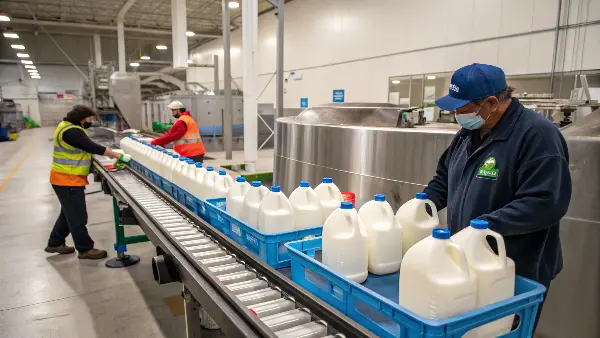
To truly understand the power of a closed-loop system, it helps to compare it with other models. For decades, our industry has largely operated on a linear "take-make-dispose" model. We take raw resources, make a product, and then it gets thrown away. It’s incredibly wasteful. Then came open-loop recycling, which was a step in the right direction. In this system, an HDPE bottle might be recycled into something like plastic lumber or a traffic cone. It’s better than a landfill, but it’s still what we call "downcycling." The material loses quality and can’t be used for its original purpose again.
A closed-loop system is the ultimate goal. Here, the product is designed from the very beginning to be recycled back into itself. This concept is about maintaining the material’s value indefinitely. Think about it: an HDPE bottle becomes a new HDPE bottle, which can then become another new HDPE bottle. This process is a core pillar of the circular economy.
Key Differences at a Glance
| Feature | Linear Model | Open-Loop Recycling | Closed-Loop Recycling |
|---|---|---|---|
| Material Flow | One-way (cradle-to-grave) | One-way, extends product life | Circular (cradle-to-cradle) |
| End Product | Waste | Lower-value product | Same, high-value product |
| Material Quality | Lost | Degraded (Downcycled) | Maintained |
| Resource Need | Constant need for virgin material | Reduced need for virgin material | Minimal need for virgin material |
Achieving a true closed loop requires immense coordination. It involves product design for disassembly, clean collection streams, and advanced sorting technologies. But the payoff is huge: it drastically reduces our reliance on fossil fuels, cuts down on waste, and creates a truly sustainable manufacturing cycle.
How Can HDPE Be Recycled Effectively?
You know HDPE is recyclable, but are you getting the most out of it? Many recycling processes result in lower-grade plastic, which isn’t suitable for your high-spec projects. This creates a reliance on virgin materials and undermines your sustainability efforts.
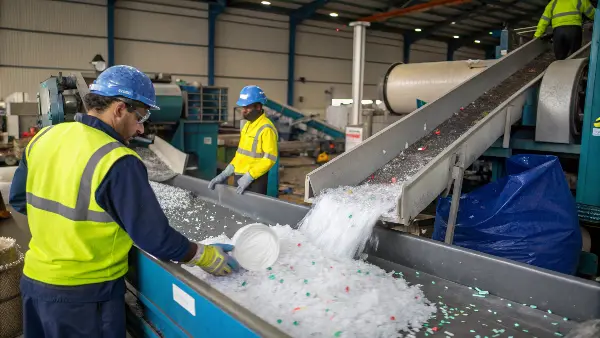
Effective HDPE recycling hinges on a clean, well-sorted material stream and advanced processing techniques. Mechanical recycling is the most common method. The process involves shredding, washing, and melting the plastic into pellets (rHDPE). To be successful, contamination from other plastics, labels, and adhesives must be minimized, as this directly impacts the final quality of the recycled material.
Recycling HDPE is not a one-size-fits-all process. The success of recycling an HDPE part back into a high-quality product depends entirely on how it’s managed from cradle to grave. I’ve worked on projects where project managers like you, let’s call him Alex, were frustrated because their "recyclable" design was failing in practice. The problem wasn’t the HDPE itself; it was the entire ecosystem around it.
First, let’s talk about the primary method: mechanical recycling. This is the workhorse of plastic recycling. The steps look something like this:
- Collection & Sorting: This is the most critical stage. Post-consumer HDPE products are collected and sorted. Color sorting is also important, as natural or unpigmented HDPE is more valuable and versatile than colored HDPE. Infrared scanners are often used to separate HDPE from PET, PVC, and other polymers.
- Shredding & Washing: The sorted HDPE is shredded into small flakes. These flakes then go through an intensive washing process to remove contaminants like dirt, leftover product, paper labels, and glue.
- Melting & Pelletizing: The clean flakes are dried, then melted down and extruded into small pellets. These pellets are what we call recycled HDPE, or rHDPE.
The quality of this rHDPE is everything. If the initial stream was contaminated with other plastics or the wrong kind of adhesive was used on the label, the final pellets will be of lower quality. That’s why Design for Recycling (DfR) is so important. As mold makers, we advise clients to think about this early on. For example, using a compatible adhesive for labels or designing single-material components makes a world of difference. Recently, we’re also seeing a rise in chemical recycling. This process breaks the polymer down to its basic chemical building blocks, or monomers. These can then be used to create new plastic that is identical to virgin material. While it’s more energy-intensive, it can handle more contaminated waste streams and produce top-tier rHDPE.
Why Is Closed-Loop Recycling Considered the Most Efficient Process?
You want to make your operations more efficient and sustainable, but the options are overwhelming. You hear about different recycling methods, but which one truly delivers the best results for your bottom line and the environment? The lack of clarity can be paralyzing.
Closed-loop recycling is considered the most efficient process because it preserves the highest possible material value. By turning a used product back into the same product, it minimizes the need for virgin raw materials, which in turn saves significant energy, water, and CO2 emissions associated with their extraction and processing. This material-to-material loop is the most direct path to a circular economy.
When we talk about "efficiency" in manufacturing, we usually mean less waste, lower costs, and faster production. Closed-loop recycling hits all these marks, but its efficiency extends far beyond the factory floor. I remember a discussion with a client who was focused solely on the cost of recycled pellets versus virgin ones. I had to explain that the true efficiency is in the total lifecycle savings.
First, there’s resource efficiency. Every ton of HDPE we recycle through a closed loop is a ton of virgin plastic we don’t have to produce. Making virgin plastic requires extracting fossil fuels (like natural gas and oil) and then using a lot of energy to process them. Recycling HDPE uses up to 88% less energy than producing it from scratch. This isn’t just an environmental win; it’s a huge operational saving that buffers a company against volatile oil prices.
Second is value efficiency. In open-loop recycling, an HDPE milk jug worth a certain amount is downcycled into a lower-value item like a pipe or a bin. The inherent value of the food-grade polymer is lost. In a closed loop, that food-grade milk jug becomes another food-grade milk jug. The material’s high value is preserved. This "value retention" is a core principle of the circular economy and makes the business case for recycling much stronger.
The Impact on the Manufacturing Process
| Efficiency Aspect | How Closed-Loop Excels |
|---|---|
| Material Costs | Reduces dependence on fluctuating virgin material prices, creating more predictable budgets. |
| Energy Consumption | Significantly lower energy use compared to virgin production, leading to direct cost savings. |
| Waste Management | Turns a liability (waste) into a valuable asset (feedstock), reducing disposal fees. |
| Brand Reputation | Meets growing consumer and regulatory demand for sustainability, enhancing brand value. |
Finally, there is systemic efficiency. A well-run closed-loop system creates a predictable supply of high-quality rHDPE. This reliability is something every project manager craves. Instead of being entirely dependent on the global supply chain for virgin materials, manufacturers can build a more resilient, localized supply chain based on their own recycled products. It’s a smarter, more efficient way to operate in the 21st century.
What Percentage of Plastic Waste is Currently Recycled in a Closed Loop?
You’re committed to sustainability, but then you see discouraging headlines about low recycling rates. It makes you wonder if your efforts to design recyclable products even matter. Are we just contributing to a pile of waste that never actually gets reused?
Globally, the percentage of plastic waste recycled in a true closed-loop system is very small, likely in the low single digits. While overall plastic recycling rates are around 9%, most of that is downcycled in open-loop systems. The infrastructure, sorting technology, and product design needed for high-purity, closed-loop recycling are not yet widespread, making it a goal rather than a current reality for most plastics.
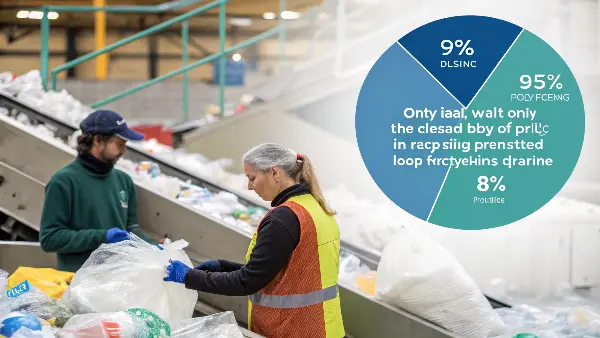
The numbers can be hard to hear. When you look at all the plastic ever produced, it’s estimated that only about 9% has been recycled at all. Of that small fraction, the majority is handled through open-loop downcycling. So, the amount of plastic that completes a true closed-loop journey—a bottle becoming a bottle again—is unfortunately tiny. Some estimates put it as low as 2%. It’s a sobering statistic, but it’s crucial to understand why this is the case. It’s not a single failure point but a series of interconnected challenges.
One of the biggest hurdles is contamination. A closed loop for a material like food-grade HDPE requires an incredibly pure stream of feedstock. If other plastics, like PET or PVC, get mixed in, it can ruin the entire batch of rHDPE. Even different colors of HDPE can be a problem. That’s why unpigmented, or "natural," HDPE from milk jugs is one of the more successfully recycled materials.
Another issue is product design. For years, we designed products for performance and cost, not for end-of-life. Multi-material components, inseparable layers, and certain additives or adhesives make recycling nearly impossible. I’ve seen countless innovative products that are brilliant in function but destined for the landfill because no one considered how to take them apart.
The Roadblocks and the Path Forward
| Roadblock | Why It Prevents Closed Loops | Potential Solution |
|---|---|---|
| Poor Collection/Sorting | Contaminated waste streams make high-quality recycling impossible. | Investment in advanced sorting tech (AI, robotics) and better municipal programs. |
| Complex Product Design | Components made of mixed materials cannot be easily separated and recycled. | Widespread adoption of Design for Recycling (DfR) principles, favoring mono-materials. |
| Economic Viability | Low oil prices can make virgin plastic cheaper than recycled plastic, removing the financial incentive. | Government policies like recycled content mandates and producer responsibility schemes. |
| Consumer Behavior | Incorrect disposal of recyclables by consumers leads to contamination at the source. | Clearer labeling (like How2Recycle) and public education campaigns. |
But here is where I see hope. While the current numbers are low, the momentum is shifting. We at CAVITYMOLD are having more conversations about DfR than ever before. Companies are realizing that sustainability is a competitive advantage. The pressure from consumers and new regulations is forcing the industry to innovate. The journey to a fully circular economy is long, but every product designed for true recycling is a critical step forward.
Conclusion
In the end, achieving true sustainability with HDPE is not a distant dream. It comes down to embracing closed-loop recycling strategies. This means designing products for disassembly, pushing for cleaner recycling streams, and championing the value of high-quality recycled materials. It’s a collective effort, and it starts with us.