
Struggling to decide where to source your next injection molding project? Making the wrong choice can lead to punishing delays and budget overruns. Understanding the unique strengths of manufacturing hubs like Mexico and China is crucial for making a smart, strategic decision that ensures your project’s success.
Choosing between Mexico and China for injection molding hinges on your primary goal. Mexico is the superior choice for speed and logistical ease, especially for projects serving the North American market. Its proximity drastically cuts shipping times. China, however, remains the leader for cost-sensitive, high-volume projects where its unparalleled supply chain and economies of scale provide a significant financial advantage, and longer lead times are acceptable.
The decision is far more complex than just comparing quotes. It’s a strategic choice that impacts your timeline, budget, and supply chain resilience. As a company that has managed projects in both countries for over a decade, we’ve guided many clients through this exact dilemma. Let’s dig deeper into the specific factors you need to weigh to make the right call for your business and avoid common pitfalls.
Is China a preferred destination for outsourced manufacturing?
For decades, "Made in China" has been the global standard for manufacturing. But with rising costs and shifting global dynamics, you might be asking if it’s still the best option for your injection molding needs. The reality is, China’s core advantages are deeply embedded and hard to replicate.
Yes, China continues to be a top-tier destination for outsourced manufacturing, particularly for complex injection molding. Its key strengths are a mature, all-encompassing supply chain, a massive pool of skilled labor, and powerful economies of scale that keep production costs low. For projects that demand intricate molds, high-volume production, and access to a vast network of material and component suppliers, China is often the most efficient and cost-effective choice.
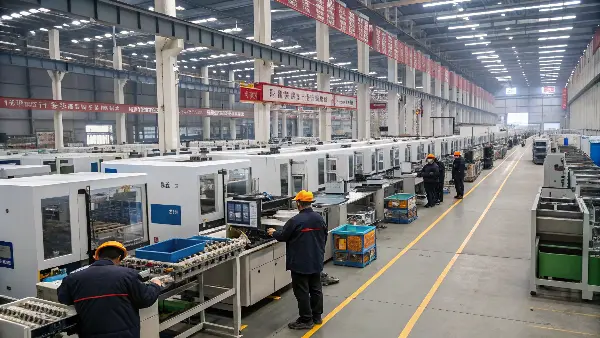
I remember a project we handled for a client developing a new piece of smart home equipment. The device had over 50 unique plastic parts, some requiring multi-shot molding and specialized resins. In China, we were able to source every single component, from the custom-colored plastics to the specific electronic connectors, within a 50-kilometer radius of our factory in Shenzhen. This integration is what makes China so powerful. Sourcing this in another country would have been a logistical nightmare, adding weeks, if not months, to the project timeline.
Unmatched Supply Chain Ecosystem
China’s biggest advantage isn’t just cheap labor; it’s the density and maturity of its supply chain. Entire cities are dedicated to specific industries. This means mold makers, resin suppliers, component manufacturers, and assembly services are all located closely together. This proximity shortens development time, reduces transportation costs between suppliers, and fosters rapid problem-solving. When a tool needs a minor adjustment, the specialist is often just down the street, not in another state or country.
Cost-Effectiveness at Scale
While labor costs have risen, China’s efficiency and scale still deliver significant cost savings, especially for large production runs. The fierce competition among suppliers keeps prices for tooling and piece parts competitive. For a project requiring a 32-cavity mold running millions of parts, the cost savings in China can be the deciding factor, making a product financially viable.
Skilled Labor and Experience
Decades as the "world’s factory" has created a deep reservoir of experienced engineers, toolmakers, and technicians. They have seen it all and solved it all. This expertise is invaluable when dealing with challenging mold designs, complex geometries, or exotic materials. This experience translates into higher quality tools, faster debugging, and more reliable production.
| Feature | China’s Manufacturing Advantage |
|---|---|
| Supply Chain Depth | Extremely deep and integrated. One-stop-shop ecosystem. |
| Tooling & Part Cost | Highly competitive, especially for high-volume projects. |
| Infrastructure | World-class ports, logistics, and industrial parks. |
| Scalability | Unmatched ability to scale production up or down quickly. |
| Technical Expertise | Decades of experience with complex and diverse projects. |
Why do foreign companies build factories in Mexico?
You’ve likely noticed a growing buzz around "nearshoring" and seen major companies announce new investments in Mexico. You might be wondering what’s driving this movement south of the U.S. border and if you’re missing a strategic opportunity. The reasons are clear, focusing on speed, risk reduction, and market access.
Foreign companies build factories in Mexico primarily to leverage its strategic geographic location next to the United States, the world’s largest consumer market. This proximity dramatically reduces shipping times and logistics costs. Furthermore, the USMCA (formerly NAFTA) trade agreement provides significant tariff advantages, creating a more stable and predictable trade environment for businesses that need a resilient and responsive supply chain.
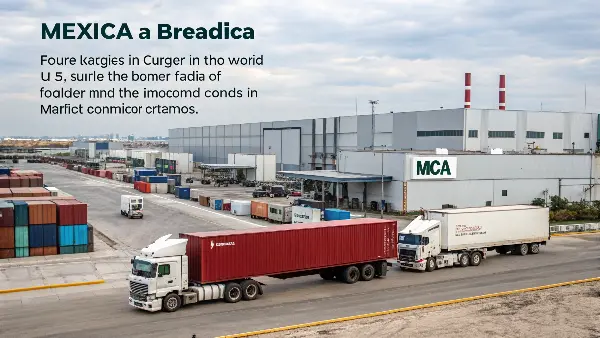
We worked with an automotive-tier supplier who was under immense pressure to deliver parts for a new vehicle launch in the U.S. Their previous supply chain from Asia was plagued by shipping delays that put their contract at risk. By moving their injection mold tooling to Mexico, they shifted from a 30-day ocean freight journey to a 3-day truck delivery. This not only ensured they met their just-in-time delivery schedule but also drastically reduced their inventory carrying costs. This is the power of nearshoring in action.
The Power of Proximity
For any business serving the North American market, Mexico’s location is its killer feature. What takes four to five weeks to ship across the Pacific from China can be trucked from a Mexican factory to a U.S. warehouse in a matter of days. This speed-to-market is a game-changer, allowing for faster product launches, quicker response to market demand, and a lean inventory model. The time zone overlap also makes communication and collaboration with U.S.-based teams far easier.
Favorable Trade Agreements
The United States-Mexico-Canada Agreement (USMCA) solidifies Mexico’s status as a premier manufacturing partner for North America. The agreement eliminates tariffs on the vast majority of goods traded between the countries, providing a significant cost advantage over sourcing from China, which is subject to various tariffs. The USMCA also includes stronger intellectual property (IP) protections and labor provisions, giving companies more confidence and legal security.
Growing Industrial Base
Mexico isn’t new to manufacturing. It has well-established and sophisticated industrial clusters, particularly in areas like Tijuana, Juarez, and the Bajio region. These regions have a skilled workforce with deep experience in industries like automotive, medical devices, and electronics. This existing ecosystem means you’re not starting from scratch; you’re tapping into a mature network of suppliers, logistics providers, and trained labor.
| Factor | Mexico’s Nearshoring Advantage |
|---|---|
| Shipping Time to US | 2-7 days by truck or rail. |
| Tariff Impact (USMCA) | Generally $0, providing significant cost savings. |
| IP Protection | Stronger legal framework under USMCA. |
| Time Zone Overlap | Facilitates real-time communication and management. |
| Supply Chain Resilience | Reduced risk of trans-oceanic shipping disruptions. |
Is made in Mexico better than China?
You’re at a critical point, facing a direct choice between a supplier in Mexico and one in China. The "better" option isn’t immediately obvious, and you know that making the wrong call could jeopardize your project’s budget and timeline. The key is to stop looking for a universally "better" country.
Neither country is inherently "better"; they are better for different strategic priorities. Mexico is "better" for projects where speed-to-market, logistical simplicity, and access to North America are paramount. China is "better" for projects that demand the lowest possible unit cost, involve high complexity, and can tolerate longer lead times. The best choice depends entirely on how you balance the triangle of cost, speed, and quality for your specific product.
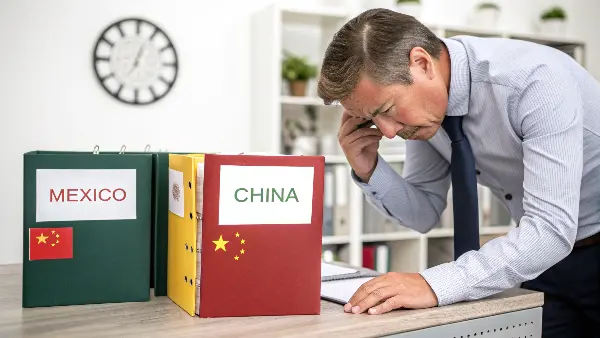
The answer truly lies in your project’s specific needs. I saw this play out perfectly with two different clients recently. The first, a startup launching a new consumer gadget, needed to be on U.S. store shelves before a key holiday. Speed was their number one priority. We recommended Mexico. From final tool approval to parts arriving at their U.S. assembly plant, it took less than a week. This would have been impossible from China. Conversely, another client producing millions of simple bottle caps needed the absolute lowest per-unit cost. The extended lead time from China was a non-issue compared to the massive cost savings on tooling and production. They made the right choice for their business model.
A Head-to-Head Comparison
To make an informed decision, you need to look at the specifics. There is no one-size-fits-all answer. Your project manager, like Alex from our persona example, needs to weigh these factors systematically. The "best" location is the one that aligns with your business goals.
| Factor | Mexico | China |
|---|---|---|
| Tooling Cost | Generally higher than China. | Very competitive, often the lowest globally. |
| Unit Part Cost | Competitive, but often higher than China. | Typically lower, especially at high volumes. |
| Shipping Time (to US) | Very fast (2-7 days by truck). | Slow (3-5 weeks by sea). |
| Shipping Cost (to US) | Lower and more predictable. | Higher and more volatile. |
| IP Protection | Strong, with legal recourse under USMCA. | Improving, but can still be a concern. |
| Supply Chain | Good, but less comprehensive than China. | The most comprehensive in the world. |
| Project Complexity | Best for moderately complex projects. | Excels at highly complex tools and assemblies. |
When to Choose Mexico
Choose Mexico when your project is for the North American market and speed is a critical factor. It’s ideal for just-in-time manufacturing, products with volatile demand, or large/bulky items where trans-pacific shipping is prohibitively expensive.
When to Choose China
Choose China when your primary driver is the lowest possible unit cost and you are producing in high volumes. It’s the best option for highly complex projects requiring an extensive supply chain and when you can build a longer lead time into your production schedule.
Will Mexico overtake China in manufacturing?
The global manufacturing map is clearly being redrawn. With all the momentum behind nearshoring to Mexico, it’s natural to wonder if we’re witnessing a changing of the guard. You hear analysts talk about Mexico becoming the "new China," and you need to know if this is just hype or a new reality you must plan for.
It’s highly unlikely that Mexico will overtake China in total global manufacturing output. China’s manufacturing ecosystem, scale, and domestic market are simply too immense. However, Mexico is on track to become the dominant manufacturing hub for North America. Rather than a total replacement, the future is the "China + 1" strategy, where companies use both nations for what they do best, building more resilient supply chains.
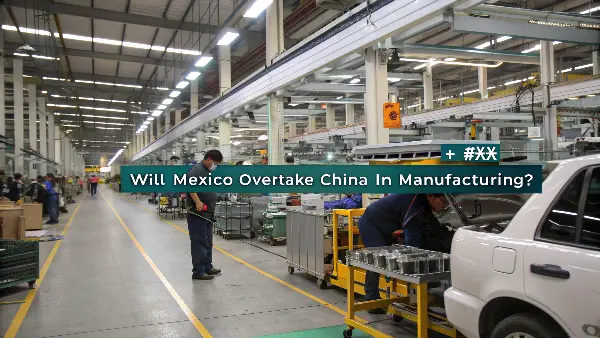
The conversation shouldn’t be about one country replacing the other. It’s about a strategic diversification. Smart companies are no longer putting all their eggs in one basket. I’ve been advising clients for years to think in terms of "China + 1." This means they maintain their core, high-volume production in China to leverage its cost advantages and scale. At the same time, they establish a secondary manufacturing source in Mexico. This Mexican operation gives them speed and flexibility for the North American market and serves as a critical backup, insulating them from potential disruptions like port shutdowns or geopolitical tensions. This dual-pronged approach is no longer a luxury; it’s becoming the new standard for intelligent global sourcing.
China’s Enduring Scale
China manufactures a staggering amount of the world’s goods. Its competitive advantage is built on a foundation of massive government investment in infrastructure, a vast domestic market that fuels growth, and an industrial base that is decades ahead of any competitor in terms of breadth and depth. Mexico can’t replicate this global scale. China will remain the world’s workshop for the foreseeable future, especially for products sold globally.
Mexico’s Regional Dominance
Mexico’s true potential lies in its role as the premier manufacturing platform for the Americas. Its logistical and trade advantages are tailor-made for serving the U.S. and Canadian markets. As companies prioritize supply chain resilience and speed, Mexico’s share of North American imports will continue to grow significantly, chipping away at China’s dominance in this specific region.
The "China + 1" Strategy
The most likely outcome is not a showdown but a strategic synergy. For a project manager like Alex, this means leveraging a global network. He might use a Chinese supplier like us at CavityMold for the initial, cost-sensitive mass production tooling. Simultaneously, he could commission a duplicate or secondary tool in Mexico to handle overflow, urgent orders, or as a strategic backup. This approach balances cost, speed, and risk.
| Strategic Role | China | Mexico |
|---|---|---|
| Primary Function | Global hub for high-volume, cost-sensitive production. | Regional hub for speed-sensitive North American supply. |
| Best For | Complex assemblies, electronics, mass-market goods. | Automotive, medical devices, large goods, JIT parts. |
| Key Risk Mitigation | Used to mitigate high tooling costs. | Used to mitigate supply chain delays and tariffs. |
| Future Outlook | Will remain dominant globally but see share erode in NA. | Will see significant growth as the NA hub. |
Conclusion
The choice is not about Mexico versus China; it’s about using Mexico and China strategically. The smartest sourcing strategy aligns your choice with your project’s specific goals. For speed and North American access, Mexico is your answer. For ultimate cost-efficiency and scale, China remains the champion.