
Ensuring food safety starts long before the meal hits the table. If you choose the wrong plastic for your packaging project, you risk contamination, legal trouble, and a ruined brand reputation. It is a critical decision that keeps many project managers awake at night.
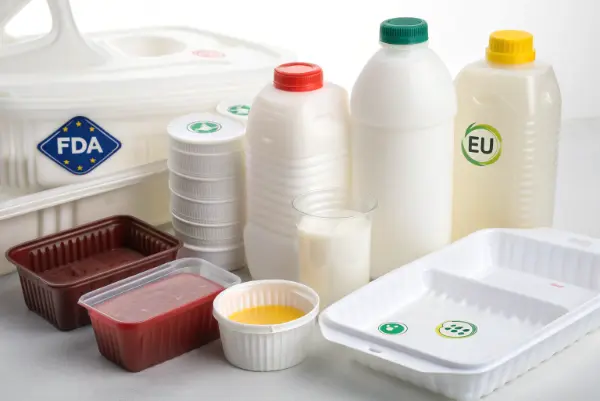
Food-grade polyethylene (PE) is safe for food packaging when it meets specific regulatory standards like FDA or EU compliance, ensuring no harmful chemicals leach into the product. It is selected based on its density (HDPE vs. LDPE), chemical resistance, and ability to withstand specific temperature ranges without degrading, making it the most common choice for everything from milk jugs to squeeze bottles.
As a manufacturer, I have seen too many companies rush the material selection process. They look at the price tag first and safety second. This is a mistake. Let’s walk through exactly how to choose the right polyethylene for your specific application so you can sleep easier.
Is polyethylene safe for food packaging?
Many consumers and even some designers worry about plastics leaching chemicals into food. You might wonder if polyethylene is truly a safe bet for your next big product launch or if you should look at alternatives like glass or metal.
Yes, polyethylene is generally considered one of the safest plastics for food packaging because it is chemically simple and does not require dangerous additives like phthalates or BPA to be flexible. High-Density Polyethylene (HDPE) and Low-Density Polyethylene (LDPE) are both widely approved by global health agencies for direct food contact due to their stability and inert nature.
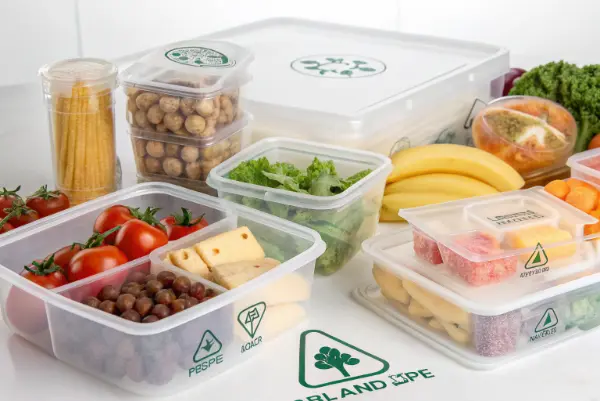
Let’s break this down further because "safe" is a broad term. In my years at CavityMold, I have handled countless PE molds. The reason polyethylene is the gold standard isn’t just because it is cheap; it is because of its molecular structure. Unlike PVC or polycarbonate, PE is essentially just chains of carbon and hydrogen. It doesn’t need plasticizers to make it soft. This means there are fewer loose chemical agents waiting to migrate into your food.
However, safety is not absolute. It depends on the grade. Industrial-grade PE might contain release agents or recycled content from non-food sources. You cannot use that for a yogurt cup. You must use "virgin" resin or certified food-grade recycled resin.
Here is a quick comparison of why we lean towards PE over other common plastics for food safety:
| Plastic Type | Common Risk | Why PE is Safer |
|---|---|---|
| Polycarbonate (PC) | often contains Bisphenol A (BPA) | PE is naturally BPA-free. |
| Polyvinyl Chloride (PVC) | often requires Phthalates (plasticizers) | PE is flexible without added plasticizers. |
| Polystyrene (PS) | Can leach styrene (a possible carcinogen) | PE has no styrene component. |
| Polyethylene (PE) | Low risk if virgin material is used | Chemically inert and stable. |
When I talk to clients, I emphasize that "safe" means the material will not react with the food. Acidic foods like tomato sauce can eat away at some plastics. PE is highly resistant to acids and bases. This chemical resistance is a huge safety factor. It ensures the package stays intact and the food stays pure.
What are the requirements for food grade packaging?
Designing a food package involves more than just picking a safe material. You have a long list of functional requirements to meet. If the package fails on the shelf or during shipping, the safety of the material doesn’t matter.
Food-grade packaging requires strict adherence to regulatory compliance, non-toxicity, and physical integrity to protect the food from external contamination. The material must act as a barrier against moisture, oxygen, and bacteria while maintaining its structure under stress, ensuring the food remains fresh and safe for consumption throughout its shelf life.
In my experience, regulatory compliance is the biggest hurdle. You need paperwork. If you are selling in the US, you need FDA Code of Federal Regulations (CFR) Title 21 compliance. If you are in Europe, you deal with Commission Regulation (EU) No 10/2011. This isn’t just red tape. These regulations define migration limits—literally, how much of the plastic is allowed to move into the food.
Beyond the law, you have functional requirements. I often explain this to clients using the "Three P’s": Protection, Preservation, and Presentation.
- Protection (Physical): The package must survive the supply chain. If I mold a container that is too thin, it might crack when a pallet is dropped. A crack means bacteria gets in.
- Preservation (Chemical/Barrier): Does the food spoil quickly? If you are packaging chips, you need a moisture barrier so they don’t get stale. PE is great for moisture but not the best for oxygen. Sometimes we need multi-layer structures (co-extrusion) where PE provides the safety layer touching the food, and another material provides the gas barrier.
- Presentation (Visual/Tactile): This matters for sales. High clarity is often desired, but HDPE is naturally hazy or opaque. If your marketing team wants a crystal-clear bottle, standard HDPE won’t work.
Here is how different food types dictate these requirements:
- Dry Foods (Rice, Pasta): Primary need is a moisture barrier. LDPE films work well here.
- Liquids (Milk, Juice): Need structural rigidity and leak resistance. HDPE blow molding is the standard.
- Hot-Fill Products: If you pour hot soup into the container, it cannot melt. Standard PE has a lower melting point than Polypropylene (PP), so we need to check the temperature requirements carefully.
We have to balance these needs. You cannot just pick a plastic; you must engineer a solution.
What are the criteria for selection of packaging materials for food?
Choosing the material is a balancing act between cost, performance, and sustainability. You cannot simply pick the "best" plastic because the "best" depends entirely on what is going on inside the package and how it is made.
The selection criteria for food packaging materials primarily focus on the chemical compatibility with the specific food product, the mechanical properties needed for transport, and the environmental impact of the material. You must evaluate density, barrier properties, processing method (injection vs. blow molding), and cost-effectiveness to find the optimal solution.
When a project manager like Alex comes to me, we start with the food itself. Is it fatty? Is it acidic? Is it liquid or solid? Fatty foods interact with plastics differently than water-based foods. Some plastics absorb fats, which can weaken the container or change the taste of the food. Polyethylene is generally good here, but we still test it.
Then we look at Density. This is the big choice in the PE family:
- LDPE (Low Density): Flexible, tough, transparent. Great for squeeze bottles, bread bags, and film wraps. It is soft to the touch.
- HDPE (High Density): Rigid, strong, opaque. Perfect for milk jugs, rigid containers, and caps. It withstands higher temperatures than LDPE.
- LLDPE (Linear Low Density): Excellent puncture resistance. Used often in thin films that need to be strong.
Next is Processing. How are we making this? If you need a complex shape with tight tolerances, we look at Injection Molding. HDPE flows well in our molds at CavityMold. If you need a hollow bottle, we look at Blow Molding. The material grade must match the machine. You cannot use injection-grade PE in a blow molding machine and expect good results. The melt flow index (MFI) will be wrong.
Let’s look at a critical thinking breakdown of the selection process:
| Criterion | Consideration | PE Performance |
|---|---|---|
| Barrier Properties | Does it block water/oxygen? | Excellent water barrier, poor oxygen barrier. |
| Temperature | Freezer or Microwave? | Good for freezing (doesn’t crack). Bad for microwave (melts). |
| Sustainability | Is it recyclable? | Highly recyclable (Code #2 and #4). Very popular for circular economy. |
| Cost | Is it affordable? | one of the cheapest polymers available. High volume keeps costs low. |
I always tell my clients: Don’t over-engineer. If LDPE does the job, don’t pay for a more expensive specialty polymer. But also, don’t under-engineer. Using a thin LDPE wall for a heavy liquid container will lead to leaks and returns.
How to determine food grade plastic?
You have the pellets in the warehouse, but are they actually food grade? Or maybe you are looking at a finished product and trying to figure out if it is safe to reuse. Identification is key to safety.
To determine if a plastic is food grade, you must verify the manufacturer’s certification documents (such as FDA compliance sheets) and check for specific recycling codes and symbols molded into the product. Look for the "fork and glass" symbol, and check for Resin Identification Codes #2 (HDPE) or #4 (LDPE), though the code alone does not guarantee food safety without proper certification.
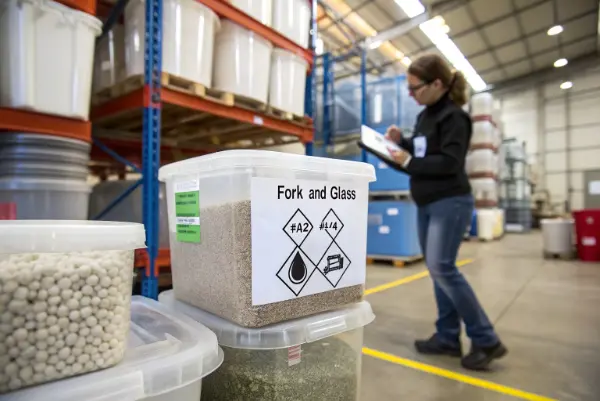
I have seen confusion here many times. Just because a bucket has a #2 triangle on the bottom does not automatically mean it is food grade. That number just tells you the polymer type (HDPE). It does not tell you what additives were used or what was in that bucket before.
Here is the hierarchy of verification I use at the factory:
- Technical Data Sheet (TDS) & SDS: This is the engineer’s bible. The resin supplier provides a document stating clearly: "Complies with FDA 21 CFR 177.1520." If I don’t see that sentence, I don’t put it in the mold for a food client.
- The "Fork and Glass" Symbol: This is the international symbol for "food safe." It is standard in Europe and recognized globally. If you are designing a product, I highly recommend adding this symbol to the mold design. It gives your end-user confidence.
- Traceability: This is huge in B2B manufacturing. We track lot numbers. If a contamination issue happens, we need to know exactly which batch of resin was used on which day. You cannot do this by just looking at the plastic. You need a system.
There are also simple physical tests you can do, though they are less scientific.
- Smell: Food-grade PE should be odorless. If it smells like chemicals or wax, something is wrong. It might be off-gassing from low-quality additives.
- Visual Inspection: Virgin food-grade PE is consistent. If you see black specs or swirls in a "natural" clear part, that is contamination. It might be degraded material or dirty machinery.
Warning on Recycling:
Never assume a recycled container is food grade unless it is explicitly marked. A pristine white HDPE bucket might have held pool chemicals previously. Plastic acts like a sponge for certain chemicals. If you reuse that bucket for marinade, those chemicals can leach back out. This is why "Post-Consumer Recycled" (PCR) content in food packaging is a very strict field. We have to be 100% sure the source material was food-grade to begin with and went through a "super-cleaning" process approved by the FDA.
At CavityMold, we keep our food-grade machines separate or purge them thoroughly. We don’t take risks. Your identification process should be just as rigorous.
Conclusion
Choosing the right polyethylene for food packaging is about balancing safety, function, and cost. Whether you choose HDPE for rigidity or LDPE for flexibility, you must ensure the resin is certified virgin material and meets regulatory standards. Always verify your documentation, test for chemical compatibility, and design for the specific needs of the food product to ensure success.