
Choosing the wrong material for your electronics enclosure can lead to catastrophic failures, safety hazards, and costly recalls. You need a material that balances protection, insulation, and cost without compromising the integrity of your device.
Polyethylene (PE) is often used for specific types of electronics enclosures, particularly those requiring chemical resistance and durability at a lower cost. While it is not as rigid as ABS or Polycarbonate, high-density polyethylene (HDPE) provides excellent electrical insulation and impact strength, making it suitable for rugged, outdoor, or chemically exposed electronic housings.
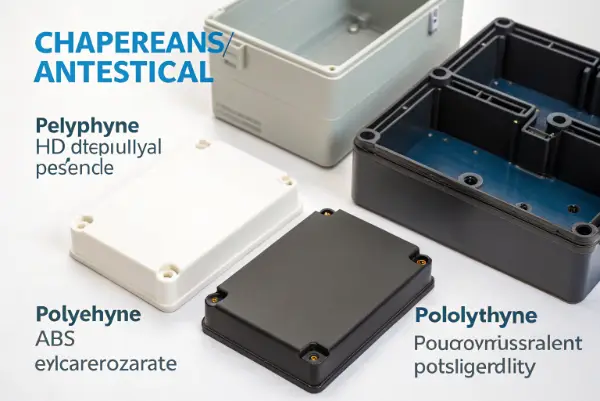
We often get asked if PE is just for milk jugs or plastic bags. It is actually much more versatile. In the sections below, I will break down exactly how this material performs in an engineering context so you can make the right decision for your next project.
What plastic is traditionally used for electric enclosures?
It can be overwhelming to scan through material data sheets when you just need a straightforward answer for your project. Many project managers default to the most expensive options just to be safe, which hurts the bottom line.
The most common plastics for electric enclosures are ABS (Acrylonitrile Butadiene Styrene) and Polycarbonate (PC). ABS is chosen for general-purpose indoor use due to its good impact resistance and low cost. Polycarbonate is preferred for transparent parts or applications requiring higher heat resistance and extreme toughness. However, Polyethylene and Polypropylene are increasingly used for chemical-resistant applications.
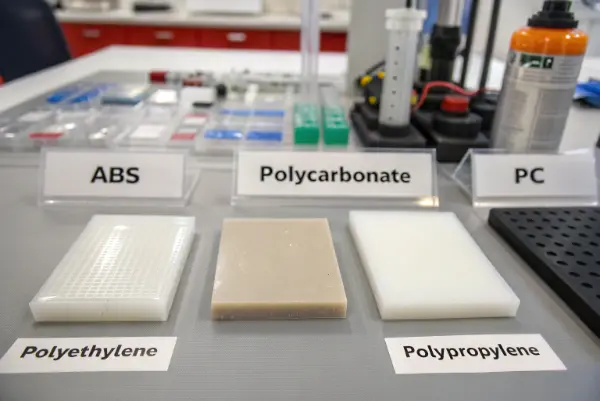
When we look at the broader landscape of enclosure materials, we have to look beyond just the standard ABS. At CavityMold, we have seen a shift in recent years. Engineers like you are looking for specific performance traits that generic plastics cannot always provide. Let’s break down the main contenders to see where Polyethylene fits into the mix.
Understanding the Material Hierarchy
To understand why you might pick one over the other, we need to compare their core properties. This helps us see where PE shines and where it might fall short.
| Material | Key Strength | Key Weakness | Best Use Case |
|---|---|---|---|
| ABS | Easy to machine/mold, cheap | Poor UV resistance, lower chemical resistance | Indoor routers, consumer gadgets |
| Polycarbonate (PC) | Extremely tough, transparent | Expensive, prone to stress cracking | Rugged outdoor gear, screens |
| Polyethylene (HDPE) | Chemical resistance, moisture barrier | Hard to bond/glue, lower heat tolerance | Outdoor utility boxes, marine electronics |
| HIPS (Polystyrene) | Very low cost | Brittle, poor UV stability | Disposable housings, prototypes |
Why deviate from the norm?
You might ask, "If ABS is the standard, why change?" The answer usually comes down to environment. I remember a project we handled for a client making agricultural sensors. They originally specified ABS. The problem was that the sensors were exposed to fertilizers and pesticides. The ABS housings started cracking within months due to chemical attack.
We suggested switching to High-Density Polyethylene (HDPE). HDPE is almost impervious to many solvents and acids. It saved their product line. While ABS is great for your living room TV remote, it fails in a chemical plant or a farm field. This is where "performance" is subjective—it depends entirely on where the box lives.
Is polyethylene considered a safe plastic?
Safety is the number one priority in electronics manufacturing, especially when dealing with consumer goods or industrial power. You cannot afford to use materials that might degrade into harmful substances or fail to contain a spark.
Polyethylene is widely considered one of the safest plastics available today. It is non-toxic, chemically inert, and does not leach harmful chemicals like BPA (Bisphenol A). For electronics, this safety extends to its stability; it does not easily degrade or release volatile organic compounds (VOCs) that could damage sensitive internal components over time.
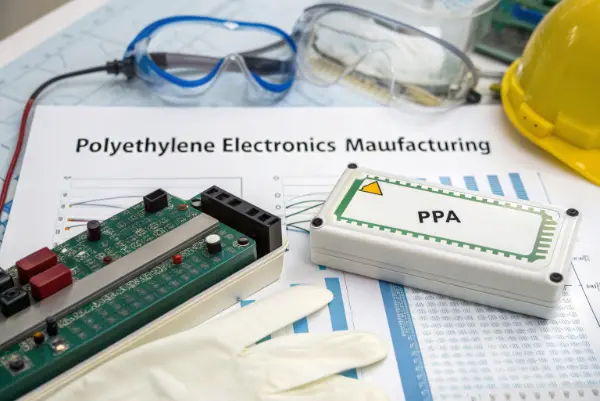
When we talk about "safety" in the context of molding and product design, we are usually talking about two different things: toxicity and stability. Polyethylene scores very high on both.
Chemical Inertness
The primary reason PE is "safe" is that it doesn’t like to react with things. In chemistry terms, it has strong molecular bonds that are hard to break. This means:
- Biocompatibility: This is why it is used in food containers and even medical implants. If your electronic device is a wearable or a handheld medical scanner, PE is a safe choice for skin contact.
- No Leaching: Unlike some PVCs or older polycarbonates, PE doesn’t leach plasticizers. This matters for electronics because outgassing from cheap plastics can sometimes corrode circuit boards in sealed enclosures.
Flammability Concerns
We must address the elephant in the room: fire safety. Standard Polyethylene is flammable. It burns like a candle if you light it. However, for electronics enclosures, we rarely use "raw" PE.
- Additives are key: We use grades of PE that are compounded with flame retardants. These additives disrupt the combustion process.
- UL Ratings: You need to look for materials with a UL 94 rating (like V-0 or V-2). If you specify generic HDPE without checking the UL rating, you might be creating a fire hazard.
At CavityMold, we always ask our clients: "Does this device plug into the wall?" If yes, we need a flame-retardant grade. If it is a low-voltage battery device, standard grades might be acceptable depending on regulations. Safety is not just about the plastic itself; it is about selecting the modified version of that plastic that fits the regulatory landscape.
Is polyethylene a good dielectric?
If a plastic housing allows electricity to pass through it, it fails its primary job of protecting the user from shock. You need assurance that the material acts as a complete barrier to electrical current.
Polyethylene is an exceptional dielectric material, meaning it is a very poor conductor of electricity and a great insulator. It has a high dielectric strength and a low dissipation factor, which makes it ideal for preventing electrical arcing and ensuring signal integrity in high-frequency applications like antennas or coaxial cable connectors.
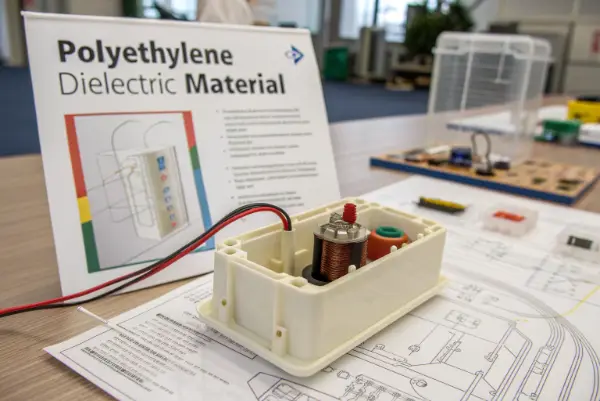
This is one area where Polyethylene truly beats many other engineering plastics. Its electrical properties are fantastic, which is why you see it used to insulate wires and cables so often. But how does this translate to an enclosure?
Dielectric Strength and Loss
Let’s look at the numbers and what they mean for your design.
- Dielectric Strength: This measures how much voltage the material can hold back before it breaks down and lets current through. PE has a very high breakdown voltage. This allows you to design thinner walls while still maintaining safety standards against electric shock.
- Dielectric Constant (Low K): PE has a low dielectric constant. In simple terms, it doesn’t store electrical energy well. This is good! If you have a Wi-Fi router or a Bluetooth device inside the enclosure, the plastic won’t absorb or block the radio signals as much as other denser plastics might.
The RF Advantage
I once worked with a startup in Sydney designing a new type of marine radar beacon. They were struggling with signal loss. Their initial prototype used a heavy, glass-filled nylon because they wanted it to be strong. The problem was that the nylon (and the glass fibers) interfered with the RF (Radio Frequency) signals.
We moved them to a rigid HDPE enclosure. Because PE is "transparent" to radio waves (low dielectric loss), their signal range increased significantly without changing the electronics.
Why this matters for your project:
- 5G and IoT: As we connect more devices, signal clarity is crucial. PE enclosures are radio-friendly.
- High Voltage: For battery packs or power supplies, PE provides a robust safety barrier against arcing.
However, a word of caution: PE attracts static electricity. It can build up a charge on the surface. If you are designing for sensitive electronics that are prone to ESD (Electrostatic Discharge) damage, we might need to add an anti-static additive to the mix during molding.
What are the considerations for enclosure design?
Knowing the material properties is only half the battle; you also have to know how to design the part so it can actually be manufactured. Ignoring design guidelines for Polyethylene can result in warped parts and assembly nightmares.
When designing enclosures with Polyethylene, you must account for its high shrinkage rate and tendency to warp. Unlike amorphous plastics like ABS, PE is semi-crystalline, meaning it shrinks significantly as it cools. You must maintain uniform wall thickness, use large draft angles, and avoid sharp corners to prevent stress concentration and deformation.
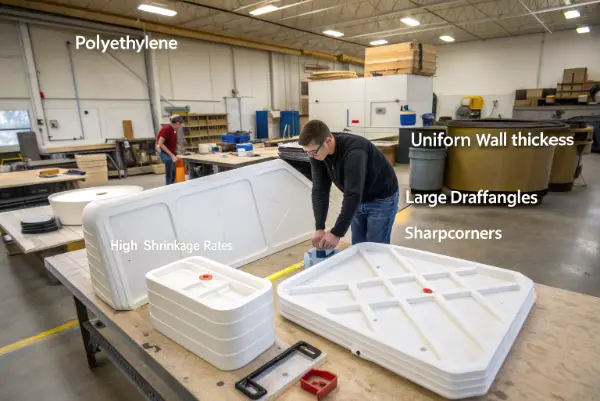
Designing for PE is different than designing for ABS or PC. You cannot just swap the material in your CAD software and hope for the best. The mold will likely need to be cut differently.
Managing Shrinkage and Warpage
This is the biggest headache for project managers. You expect a box that is 100mm wide, and it comes out of the mold at 98mm and slightly twisted.
- Shrinkage Rates: ABS shrinks about 0.5%. HDPE can shrink anywhere from 1.5% to 3.0%. That is a huge difference. If you use an existing mold designed for ABS and inject PE into it, your parts will be too small.
- The Cooling Factor: Because PE is semi-crystalline, it crystallizes as it cools. Different thicknesses cool at different rates. If one wall is thick and another is thin, the thick one shrinks more. This pulls the part out of shape (warpage).
- Solution: We always advise keeping wall thicknesses perfectly consistent. If you need a rib for strength, keep it to 60% of the wall thickness to avoid sink marks, but be aware that ribs can sometimes induce warpage in PE if not placed carefully.
Assembly and Finishing
Another critical design consideration is how you put the box together.
- Bonding Issues: Nothing sticks to Polyethylene. You cannot use standard super glue or epoxy. It just peels off.
- Fastening: Since you cannot glue it easily, you must rely on mechanical fasteners. You should design for screws, snap-fits, or ultrasonic welding.
- Snap-Fits: The good news is that PE is very ductile (stretchy). It is excellent for snap-fits. You can design aggressive snaps that would break in Acrylic or Styrene, and PE will handle them just fine. It creates a very robust, "unbreakable" feel for battery doors and latches.
Surface Finish:
PE has a waxy feel. It is hard to get a high-gloss, "piano black" finish like you can with PC or ABS. It tends to look better with a textured surface (EDM finish). This texture also helps hide minor sink marks and scratches, keeping the product looking newer for longer in the field.
Conclusion
Polyethylene is a safe, highly effective insulator that is perfect for enclosures requiring chemical resistance and durability, though it requires careful design to manage shrinkage. While it may not replace ABS for high-gloss consumer goods, its dielectric properties and toughness make it a top contender for industrial and outdoor electronics.