
Are you struggling to select the right PVC grade for your project? The wrong choice can lead to product failure, costly rework, and project delays. It feels like a gamble when performance and reliability are on the line, and you need data you can trust.
To fully understand PVC’s properties, engineers must conduct a series of standardized tests. Key mechanical tests include tensile strength (ASTM D638), flexural modulus (ASTM D790), Izod impact strength (ASTM D256), and Shore hardness (ASTM D2240). Physical property tests like heat deflection temperature (ASTM D648) and density (ASTM D792) are also critical. Combining these results gives a complete performance profile, ensuring your material choice meets specific application demands.
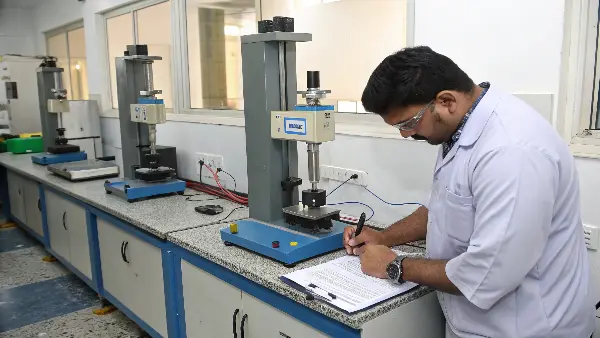
It’s a familiar story for many of us in the industry. You have a new product, and PVC seems like the perfect material—it’s versatile and cost-effective. But "PVC" isn’t just one thing. It’s a whole family of materials with a huge range of properties depending on its formulation. Getting it right isn’t just about picking from a catalog; it’s about understanding the deep-down characteristics of the specific grade you’re considering. Over my years at CavityMold, I’ve seen how a solid testing plan can be the difference between a successful product launch and a frustrating setback. Let’s walk through the essential tests that will give you the confidence you need.
What Are the Core Mechanical Properties of PVC You Must Test?
Trying to design a part without knowing its core mechanical properties is like navigating without a compass. You might have a general direction, but you’re likely to get lost. A failure in the field due to unforeseen stress can be a disaster for your project’s budget and timeline.
The essential mechanical properties to test for any PVC application are tensile strength, flexural modulus, impact strength, and hardness. These four tests provide a fundamental understanding of how the material will behave under load, bending, sudden shocks, and surface indentation. They form the baseline for evaluating a PVC grade’s suitability for structural components and high-contact parts, ensuring reliability and preventing premature failure in service.
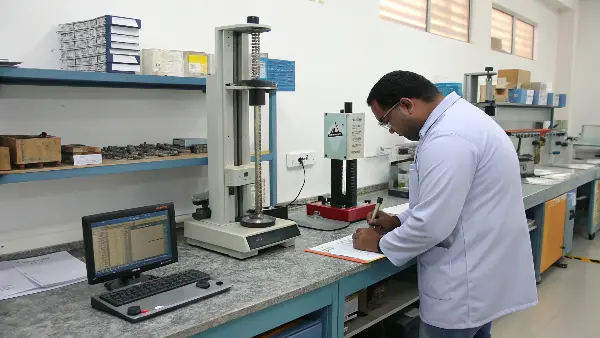
When my team and I evaluate a new PVC compound, these four tests are our starting point. They give us a clear, data-driven picture of the material’s capabilities, which is far better than relying on a supplier’s datasheet alone. Datasheets are a good reference, but they often present data under ideal lab conditions. Your real-world application will have its own unique stresses. Verifying these properties yourself is a non-negotiable step for us at CavityMold.
Let’s break down what each test tells us.
Understanding the "Big Four" Mechanical Tests
These tests are the pillars of material characterization for PVC.
- Tensile Strength (ASTM D638): This is arguably the most important mechanical test. We pull a standardized "dog-bone" shaped sample until it breaks. This tells us the maximum stress the material can withstand before failing under tension. It also reveals its elongation at break, showing how much it will stretch. For a part that will be pulled or stretched, this data is critical.
- Flexural Modulus (ASTM D790): Here, we place a rectangular bar of PVC on two supports and apply a force to its center. This measures the material’s stiffness or resistance to bending. A high flexural modulus means a rigid material, which is great for structural housings. A lower modulus indicates more flexibility.
- Impact Strength (Izod/Charpy, ASTM D256): This test measures the material’s ability to resist a sudden, high-force impact. A weighted pendulum strikes a notched sample, and we measure the energy absorbed during fracture. This is essential for any part that might be dropped or hit, like a power tool casing or a protective cover.
- Hardness (Shore Durometer, ASTM D2240): This measures the material’s resistance to surface indentation. For PVC, we typically use the Shore D scale for rigid grades and Shore A for flexible ones. It’s a good indicator of scratch and wear resistance.
| Test Name | ASTM Standard | What It Measures | Why It’s Important for PVC Parts |
|---|---|---|---|
| Tensile Strength | ASTM D638 | Resistance to being pulled apart | Determines suitability for load-bearing or tensioned parts. |
| Flexural Modulus | ASTM D790 | Stiffness or resistance to bending | Crucial for structural parts that must not sag or deform. |
| Impact Strength | ASTM D256 | Ability to withstand sudden shock | Essential for products that may be dropped or impacted. |
| Hardness | ASTM D2240 | Resistance to surface indentation | Indicates scratch resistance and durability for surfaces. |
How Do Thermal Properties Influence PVC’s Performance in Real-World Applications?
Ever seen a plastic dashboard warp and deform after a few hot summers? That’s a classic case of ignoring thermal properties. A material that performs perfectly at room temperature can fail spectacularly when exposed to heat or cold, creating safety risks and ruining a product’s reputation.
Thermal properties dictate the operational temperature range of a PVC part. The Heat Deflection Temperature (HDT) indicates the temperature at which a part deforms under load, defining its upper service limit. The Vicat Softening Point shows when it begins to rapidly soften. For cold environments, the brittle temperature is critical. These metrics are vital for ensuring dimensional stability and functional integrity in real-world temperature fluctuations.
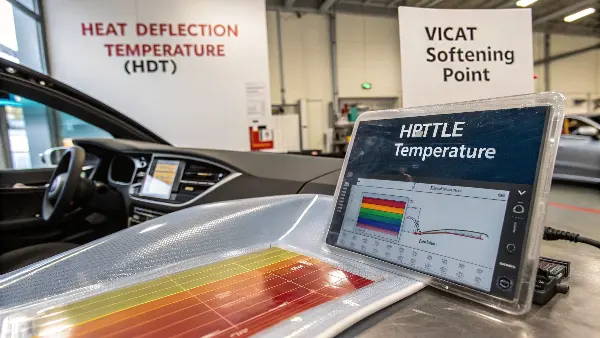
I once worked on a project for an outdoor electronics enclosure. The initial PVC grade we chose looked great on paper and passed all the standard mechanical tests with flying colors. But we failed to properly consider the intense summer sun it would be exposed to. A few months after launch, we started getting reports of the enclosures warping. It was a costly lesson. Now, thermal analysis is a mandatory step in our validation process. It ensures the product not only works out of the box but continues to work for years, no matter the weather.
Let’s look at the key thermal tests you should be running.
Key Tests for Thermal Stability
Understanding how PVC behaves with temperature changes is crucial for long-term product success.
- Heat Deflection Temperature (HDT) – ASTM D648: This is one of the most common thermal tests. We submerge a sample in a heated oil bath and apply a standard load. The temperature at which the bar deflects by a specific amount is its HDT. This value gives engineers a clear idea of the maximum temperature the material can handle while still supporting a load. It’s a critical factor for parts used in electronics, automotive interiors, or near any heat source.
- Vicat Softening Temperature – ASTM D1525: This test is similar to HDT but measures something slightly different. A flat-ended needle with a specific load is placed on the PVC surface. As the sample is heated, we record the temperature at which the needle penetrates 1 mm deep. This indicates the point where the material rapidly loses its structural integrity and softens. It’s often used for quality control and material characterization.
- Coefficient of Linear Thermal Expansion (CLTE) – ASTM E831: This test measures how much the material expands when heated and contracts when cooled. A high CLTE means the part will change size significantly with temperature shifts. This is vital information for designing assemblies with tight tolerances, especially when PVC is mated with other materials like metal. Mismatched expansion rates can cause stress, warping, or part failure.
By analyzing the results from these three tests, you can confidently predict how your PVC part will maintain its shape and function across its expected temperature range.
Why Is Density and Water Absorption Testing So Important for PVC Parts?
You might think density is a minor detail, but it directly impacts your project’s bottom line. For high-volume production, even a small difference in material density can lead to significant variations in part weight and, therefore, material cost. Water absorption can be even more sinister, silently degrading a part’s properties over time.
Density (ASTM D792) is crucial for weight calculations, cost analysis, and ensuring material consistency between batches. Water absorption (ASTM D570) is vital for parts used in humid or wet environments, as moisture can alter dimensional stability, degrade mechanical properties, and affect the electrical insulating characteristics of the PVC. Neglecting these tests can lead to unexpected cost overruns and long-term reliability issues.
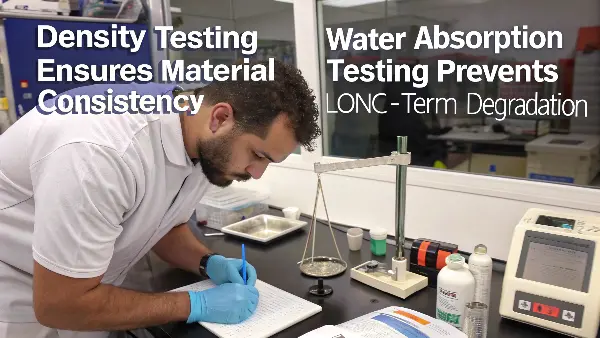
We had a client who was developing a series of submersible electronic sensors. The housing was made from a specific grade of PVC. In the early prototypes, everything worked fine. But when they moved to full production with a different batch of the "same" material, they saw intermittent failures. It turned out the new batch had slightly higher water absorption. Over time, moisture was seeping in and shorting out the electronics. A simple water absorption test at the start would have caught this and saved them a massive headache.
The Impact of Physical Properties
These two physical tests might seem basic, but their implications are far-reaching.
- Density (Specific Gravity) – ASTM D792: This test is quite simple. We weigh a sample in air and then weigh it again while it’s submerged in a liquid of known density (usually water). The ratio of these weights gives us the specific gravity, which is directly related to density. Why does this matter?
- Cost: Plastic is sold by weight. A lower-density material means you get more volume for the same weight, resulting in more parts per kilogram and lower material cost.
- Quality Control: A significant deviation in density from batch to batch can indicate problems with the polymer formulation, such as incorrect filler levels or voids in the material.
- Part Weight: For applications in automotive, aerospace, or portable devices, minimizing part weight is often a key design goal.
- Water Absorption – ASTM D570: To perform this test, we first weigh a dried sample. Then, we immerse it in water for a specified period (typically 24 hours) at a controlled temperature. After removing and patting it dry, we weigh it again. The percentage increase in weight is the water absorption value. Even though PVC is generally resistant to water, small amounts of absorption can have major consequences. It can cause the part to swell, changing its dimensions and potentially compromising its fit in an assembly. More importantly, absorbed water can act as a plasticizer, reducing tensile strength and stiffness.
| Property | ASTM Standard | Measurement | Importance in Application |
|---|---|---|---|
| Density | ASTM D792 | Mass per unit volume | Affects part cost, weight, and material consistency. |
| Water Absorption | ASTM D570 | % weight gain after water immersion | Critical for dimensional stability and property retention in wet or humid conditions. |
What Are the Key Differences Between Rigid and Flexible PVC Testing?
Engineers often talk about "PVC" as if it’s a single material, but the difference between rigid and flexible PVC is like night and day. Treating them the same during testing is a recipe for misleading results. A test that’s critical for a rigid pipe might be irrelevant for a flexible tube.
The main difference lies in the properties being prioritized. For rigid PVC (PVC-U), tests for high stiffness (flexural modulus), impact strength (Izod), and hardness (Shore D) are critical. For flexible PVC, the focus shifts to elongation, tear strength (ASTM D624), compression set (ASTM D395), and a different hardness scale (Shore A). The testing methods are adapted to capture the unique behaviors of each type.
I remember consulting for a company making medical tubing. They were used to working with rigid plastics and applied the same testing mindset to a new flexible PVC compound. They were overly focused on flexural modulus, a metric that has little meaning for a material designed to be highly flexible. They completely overlooked tear strength and compression set. Their initial prototypes kept kinking and tearing in trials. We had to help them reframe their testing protocol to focus on the properties that actually matter for a flexible application.
Tailoring Your Test Plan
The key is to align your testing protocol with the material’s intended function.
Testing Focus for Rigid PVC (PVC-U)
Rigid PVC, or unplasticized PVC, is valued for its strength and durability. It’s used in pipes, window frames, and electrical enclosures. Your testing should therefore focus on its structural integrity.
- High Flexural Modulus (ASTM D790): You need to confirm its stiffness to ensure it won’t bend or sag under load.
- High Impact Strength (ASTM D256): It must be able to resist shattering from accidental impacts.
- Heat Deflection Temperature (HDT, ASTM D648): Because it’s often used in construction and outdoor applications, its ability to hold its shape at elevated temperatures is crucial.
- Hardness (Shore D): A high Shore D hardness indicates good resistance to wear and abrasion.
Testing Focus for Flexible PVC
Flexible PVC contains plasticizers that give it its rubber-like properties. It’s used for hoses, cable insulation, and gaskets. The testing priorities are completely different.
- Elongation and Tensile Strength (ASTM D638): While tensile strength is still important, the elongation at break is often more critical. You want to know how much it can stretch before it snaps.
- Tear Strength (ASTM D624): This measures the material’s resistance to the growth of a nick or cut when under tension. It is absolutely vital for tubing and films.
- Compression Set (ASTM D395): This is key for sealing applications like gaskets. It measures the material’s ability to return to its original thickness after being compressed for a long time at a specific temperature. A low compression set value is desirable.
- Hardness (Shore A): We use the Shore A scale, which is designed for softer, elastomeric materials.
By separating your mindset for these two PVC families, you ensure your test data is relevant and actionable for your specific design.
How Can You Set Up a Reliable PVC Testing Protocol in Your Workflow?
Knowing which tests to run is one thing; integrating them into a practical, repeatable workflow is another challenge entirely. Without a clear protocol, testing can become ad-hoc, inconsistent, and difficult to manage, leading to unreliable data and project delays.
To set up a reliable PVC testing protocol, first define your product’s performance requirements. Then, select the corresponding ASTM tests (tensile, impact, thermal, etc.). Create a standardized "Test Request Form" detailing the material, tests needed, and acceptance criteria. Consistently document every result in a central database to track batch-to-batch variations and build a historical performance library for future projects. This structured approach ensures consistency and data-driven decisions.
When CavityMold first started, our testing was a bit chaotic. An engineer would ask for a "tensile test" without specifying conditions, and results were stored in scattered spreadsheets. It was inefficient. We solved this by developing a simple but rigid internal process. Everything starts with a clear definition of what "success" looks like for the part. From there, we build a testing plan with clear pass/fail criteria before any material is even ordered. This simple discipline has saved us countless hours and prevented numerous potential failures down the line.
Building a Practical and Actionable Protocol
Here’s a step-by-step approach project managers like Alex can implement.
1. Define Application Requirements First
Before you even think about a specific test, document the real-world conditions the part will face.
- Mechanical Loads: Will it be stretched, compressed, or impacted?
- Thermal Environment: What is the minimum and maximum operating temperature?
- Chemical Exposure: Will it contact oils, solvents, or cleaning agents?
- Regulatory Needs: Does it need to meet FDA, UL, or other standards?
This builds the foundation for your test plan.
2. Create a Standardized Test Matrix
Develop a simple template that connects application requirements to specific ASTM tests. This becomes your go-to guide.
| Requirement | Primary Test | Secondary Test | Acceptance Criterion (Example) |
|---|---|---|---|
| Structural Rigidity | Flexural Modulus (D790) | HDT (D648) | > 3,000 MPa |
| Impact Resistance | Izod Impact (D256) | Tensile Strength (D638) | > 50 J/m |
| Sealing Function | Compression Set (D395) | Shore A Hardness (D2240) | < 25% |
| Outdoor Use | Weathering/UV Test | Water Absorption (D570) | No significant color change after 2000 hrs |
3. Implement Quality Gates
Integrate testing into your project milestones. A typical flow could be:
- Material Selection: Initial datasheet review and small-sample testing.
- First Article Inspection (FAI): Test parts from the first production run to validate the tool and process.
- Ongoing Batch Testing: Periodically test samples from new material batches to ensure consistency from your supplier.
A structured protocol transforms testing from a chore into a powerful risk management tool, giving you and your team confidence in your material choices.
Conclusion
Understanding PVC’s properties is not about memorizing datasheet values. It’s about implementing a systematic testing process. By focusing on mechanical, thermal, and physical tests relevant to your application, you can ensure your final product is reliable, safe, and cost-effective, turning material selection into a science, not a guess.