
Struggling to picture where sheet metal fits into the modern world? It’s a foundational process that’s easy to overlook, making you wonder about its true relevance and scope. Let’s explore exactly which major industries depend on sheet metal fabrication every single day.
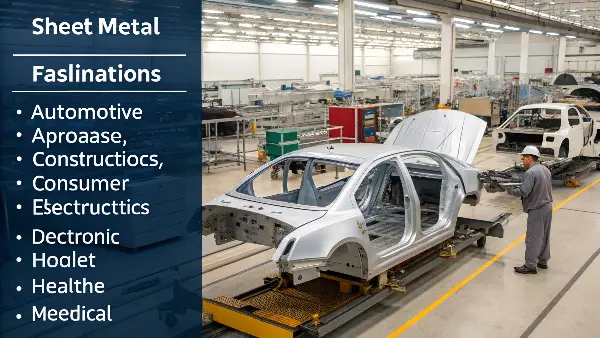
Sheet metal fabrication is crucial across numerous sectors. You’ll find it extensively in automotive for car bodies and frames, aerospace for aircraft structures, construction for roofing and ductwork, consumer electronics for casings, and healthcare for medical devices. Its versatility in creating durable, lightweight, and precise parts makes it indispensable for modern production lines. It’s a cornerstone of manufacturing almost everywhere you look.
Now that you have a quick overview, you might be curious about the specifics. Let’s dig a little deeper into the vast world of sheet metal fabrication and see just how integral it is. The applications are more widespread than you might imagine, and understanding them can provide a real advantage.
In what industries might you find metal fabrication being used?
Ever wondered how many products around you started as a flat sheet of metal? It’s a process so common it’s almost invisible, which can leave its true impact unappreciated by many. Let’s uncover the wide range of industries where sheet metal fabrication is not just used, but absolutely essential for daily operations.
You will find sheet metal fabrication in industries like automotive, for everything from chassis to body panels. Aerospace uses it for fuselages and wings. Construction relies on it for structural beams and HVAC systems. The electronics industry needs it for enclosures and frames. Even the food service industry uses it for stainless steel kitchen equipment. Its reach is incredibly broad.
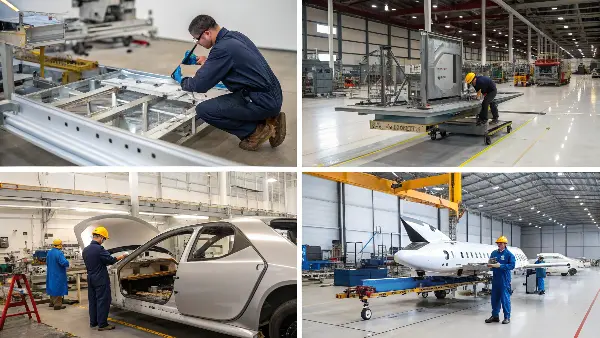
The incredible versatility of sheet metal is why it’s a manufacturing staple. The ability to cut, bend, and assemble metal into complex shapes makes it perfect for a huge number of applications. It offers an excellent strength-to-weight ratio and is often more cost-effective than other processes like CNC machining for certain parts. I remember a project manager, a lot like Alex in Australia, who was amazed when we showed him how a multi-part machined assembly could be redesigned into a single, cost-effective sheet metal component.
The Backbone of Transportation
In both the automotive and aerospace industries, sheet metal is king. For cars, it’s used for everything from the main body and chassis to smaller brackets and internal components. In aerospace, safety and weight are critical. Sheet metal, particularly aluminum and titanium alloys, forms the fuselage, wings, and control surfaces of aircraft. The precision required in this sector is immense, and modern fabrication techniques deliver it perfectly.
The Framework of Our World
Look at any building, and you’ll see sheet metal. The construction industry uses it for structural steel beams, roofing, gutters, and wall panels. Inside, the entire HVAC system—the ductwork that delivers air throughout the building—is made from fabricated sheet metal. It’s the skeleton and the respiratory system of our modern structures.
The Casing for Our Technology
Every electronic device, from your laptop to large data servers, needs an enclosure. Sheet metal provides durable, lightweight, and protective casings. It also helps with heat dissipation and shields internal components from electromagnetic interference. For a project manager designing consumer electronics, getting the enclosure right is just as important as the circuit board inside.
What is one of the industries that rely heavily on metal fabrication?
Is there one industry that truly stands out in its reliance on sheet metal? It can be hard to pick just one, which sometimes makes it difficult for project managers to understand the core applications. Let’s focus on a single, massive industry to see just how deep the dependency on sheet metal goes.
The automotive industry is one of the largest and most critical sectors that relies heavily on metal fabrication. From the vehicle’s structural frame and body panels to the exhaust system and small mounting brackets, nearly every major component is a product of sheet metal processes. This reliance is due to the need for strength, safety, precision, and cost-effective mass production.
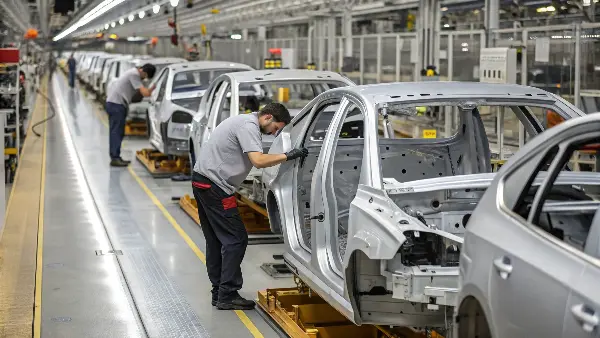
When you think about a car, you are essentially picturing a complex assembly of sheet metal parts. The sheer scale of automotive production means that the processes used have to be reliable, repeatable, and economical. This is where sheet metal fabrication truly shines. I’ve worked on dozens of projects for automotive clients, and the focus is always the same: precision, speed, and cost. A project manager in this field, like Alex, needs suppliers who understand the tight tolerances and rapid turnaround times demanded by the industry. The entire supply chain is built around just-in-time manufacturing, and sheet metal fabrication is a critical link.
Let’s break down how different fabrication processes are used for specific automotive parts.
| Automotive Component | Primary Fabrication Process | Key Material Properties |
|---|---|---|
| Body Panels (Doors, Hood) | Stamping, Bending | Formability, Smooth Surface Finish, Dent Resistance |
| Chassis / Frame | Laser Cutting, Welding | High Strength, Rigidity, Durability |
| Exhaust System | Tube Bending, Welding | Corrosion Resistance, Heat Tolerance (e.g., Stainless Steel) |
| Brackets & Mounts | Punching, Bending | Strength, Precision Fit |
| Battery Enclosures (EVs) | Stamping, Welding, Assembly | Strength, Lightweight, Thermal Management, Sealing |
The rise of electric vehicles (EVs) has only increased the demand for advanced sheet metal fabrication. Battery enclosures, for example, are highly complex components that must be strong enough to protect the batteries in a crash, yet light enough to maximize the vehicle’s range. They also require precise thermal management features. This has pushed our teams at CavityMold to innovate continuously, developing new techniques to meet these evolving standards.
Are metal fabricators in demand?
Thinking about all these industries, a critical question comes to mind for any project manager or engineer. Are the people with these skills actually available? The constant evolution of technology can make you worry about skills gaps, potentially delaying your projects if you can’t find the right expertise.
Yes, metal fabricators are in high demand. As manufacturing grows more advanced and industries like aerospace, automotive, and renewable energy continue to expand, the need for skilled fabricators who can work with new materials and complex designs is rising. This demand isn’t just for manual labor; it’s for technicians who can operate sophisticated CNC machinery and robotic systems.
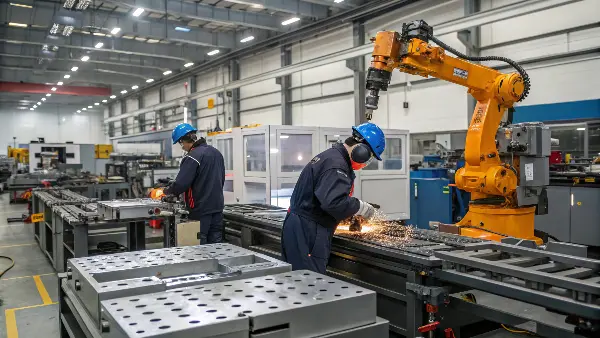
The demand for metal fabricators is strong and shows no signs of slowing down. For a project manager like Alex, this is a double-edged sword. On one hand, it confirms that the industry is healthy and that these skills are valued. On the other, it means competition for top talent and reliable partners can be fierce. I’ve seen this firsthand. Finding a partner who not only has the right equipment but also the experienced team to run it is crucial for project success. The best fabricators are more than just machine operators; they are problem-solvers.
The Modern Fabricator’s Skillset
The image of a fabricator as someone just manually cutting and welding metal is outdated. Today’s fabricator is a highly skilled technician.
- CNC Operation: Modern fabrication relies on computer numerical control (CNC) machines like laser cutters, punch presses, and press brakes. Fabricators need to be proficient in setting up, programming, and operating this equipment to ensure parts are made to exact specifications.
- Welding Expertise: While automation is growing, skilled welders are still irreplaceable, especially for complex assemblies and specialized materials. Certifications in TIG and MIG welding are highly sought after.
- Blueprint and CAD Literacy: A fabricator must be able to read and interpret complex technical drawings and 3D CAD models. This ensures that the final product matches the design intent perfectly.
- Quality Control: The job doesn’t end when the part is made. Fabricators are often responsible for inspecting their own work, using tools like calipers and gauges to ensure every dimension meets the required tolerance.
Is there a high demand for sheet metal workers?
Focusing specifically on sheet metal, does this specialized skill set have a secure future? If your projects rely on these specific processes, you need to be sure that the workforce is stable and growing. It’s a valid concern when planning long-term production strategies.
Absolutely. There is a high and sustained demand for skilled sheet metal workers. This demand is driven by constant activity in construction (HVAC systems), automotive manufacturing, aerospace, and the production of electronics and appliances. The retirement of an older generation of workers combined with the need for new skills in automation and advanced materials creates significant opportunities.
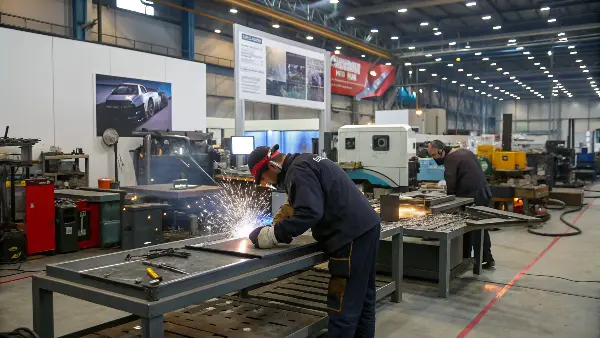
The demand for sheet metal workers is not just high; it’s evolving. A project manager I worked with recently was struggling to find a supplier who could handle a new type of high-strength steel alloy. His usual partners didn’t have the expertise. This highlights a key trend: the demand is strongest for workers who can adapt and learn new technologies. As materials and designs become more complex, so do the skills needed to work with them.
Why the Demand Remains Strong
Several factors contribute to the ongoing need for these professionals.
1. Infrastructure and Construction Growth
Every new hospital, office building, or factory needs extensive ductwork for its HVAC system. This is the bread and butter of many sheet metal shops. As long as we are building, we will need people to fabricate and install these systems.
2. Manufacturing’s Technological Shift
The move towards automation and robotics in manufacturing doesn’t eliminate the need for sheet metal workers. Instead, it changes their role. We now need workers who can program and maintain robotic welding arms, oversee automated press brake cells, and manage complex production workflows. This creates a demand for a more tech-savvy type of worker.
3. The Green Energy Revolution
The renewable energy sector is a major driver of demand. Wind turbines, for example, contain numerous fabricated metal components. Solar panel mounting systems are often made from sheet metal. As we transition to cleaner energy sources, the need for skilled metal workers to build the necessary infrastructure will only grow. I personally find it exciting to be part of projects that contribute to this sustainable future.
Conclusion
Sheet metal fabrication is not just a legacy process; it’s a dynamic and essential part of modern industry. From the cars we drive to the buildings we work in, its applications are everywhere. As technology advances, the demand for skilled fabricators who can master new materials and automation remains strong.