
Choosing HDPE seems straightforward until a bad batch causes production chaos. Inconsistencies in material can lead to part failures, project delays, and unhappy clients. Understanding the right tests is your best defense against these problems and ensures your final product performs exactly as designed.
The best way to properly test HDPE is by conducting a series of standardized tests. Key assessments include the Melt Flow Index (MFI) for processability, tensile and flexural tests for strength, Environmental Stress Cracking Resistance (ESCR) for long-term durability, and impact tests like Izod for toughness. Following specific ASTM or ISO standards for each test ensures the material meets your project’s precise mechanical and physical requirements.
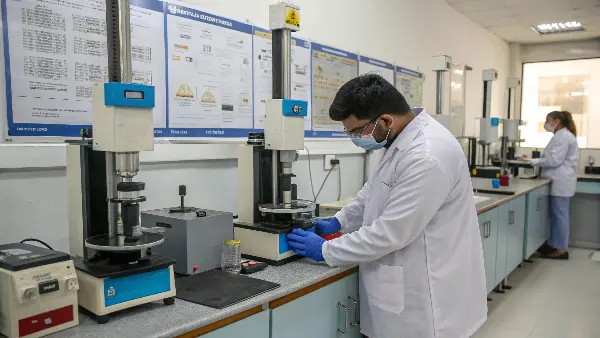
I’ve been working with polymers for over two decades, and if there’s one thing I’ve learned, it’s that you can’t just trust a datasheet. The numbers look good on paper, but how the material behaves in your specific mold, under your specific conditions, is what truly matters. I remember a project involving high-stress snap-fit closures where the client-supplied HDPE kept failing. The datasheet claimed it was perfect, but our tests told a different story. That experience reinforced my belief that rigorous, in-house verification isn’t optional; it’s essential for success. This is why we’ve developed a clear testing a pproach to protect every project. Let’s walk through the critical tests you need to know.
Why is the Melt Flow Index (MFI) the First Test We Always Run for HDPE?
You’ve specified an HDPE grade, but how do you know it will actually flow correctly in your mold? An MFI mismatch can lead to under-filled parts, high injection pressure, or excessive flash. These issues halt production and force costly tooling adjustments, all because of an unverified material property.
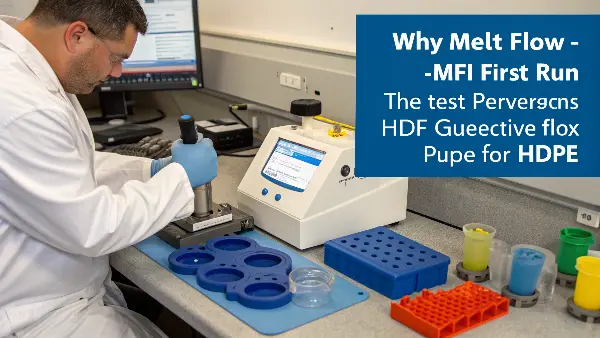
The Melt Flow Index (MFI) is the first test because it directly predicts how HDPE will behave during injection molding. It measures the polymer’s flow rate under specific temperature and load conditions. A consistent MFI ensures predictable mold filling, cycle times, and part quality. It’s a quick, simple, and essential first check to prevent major processing headaches before they start, confirming the material is suitable for your specific machine and mold design.
Diving Deeper into MFI
The MFI test, often governed by the ASTM D1238 standard, is fundamentally a measure of the material’s viscosity at melt temperature. It tells us the mass of polymer (in grams) that flows through a standardized die in 10 minutes. For an engineer like Alex, this isn’t just a number; it’s a direct indicator of manufacturability.
A lower MFI value means the material has a higher molecular weight and higher viscosity, making it more difficult to flow. This is great for applications requiring high strength and toughness, like pressure pipes, but can be a nightmare for molding thin-walled, complex parts. Conversely, a higher MFI means lower viscosity and easier flow, perfect for intricate designs but potentially at the cost of some mechanical properties like impact strength.
We had a case where a client switched to a "cost-effective" HDPE for a series of large storage containers. The new material had a slightly lower MFI than the original spec. During the initial run, we immediately saw short shots and surface defects. The material was too viscous to fill the large mold completely before cooling. By running a quick MFI test, we confirmed the discrepancy and advised the client. Adjusting the processing temperature and pressure helped, but it was a clear lesson: even a small deviation in MFI can have big consequences.
Here’s a simplified breakdown:
| MFI Value | Molecular Weight | Viscosity | Processing Behavior | Typical Applications |
|---|---|---|---|---|
| Low | High | High | Harder to process, slower flow | Extrusion (pipes), blow molding |
| High | Low | Low | Easier to process, faster flow | Injection molding (thin walls) |
Therefore, verifying the MFI of every new batch of HDPE is our non-negotiable first step. It ensures the material matches the process it was designed for, saving time, money, and preventing a lot of frustration on the factory floor.
How Do You Accurately Measure HDPE’s Resistance to Environmental Stress Cracking?
You designed a fantastic HDPE part, but months later, it fails in the field under minimal stress. The culprit is often environmental stress cracking, a slow and brittle failure caused by the combined action of stress and a chemical agent (like a detergent or oil). This is a silent killer for product reliability.
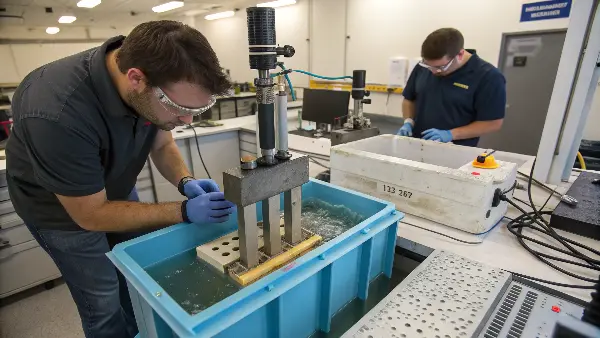
To accurately measure Environmental Stress Cracking Resistance (ESCR), we use the "bent strip" method defined by ASTM D1693. In this test, notched HDPE specimens are bent and held in a fixture, then submerged in a stress-cracking agent like IGEPAL CO-630. We record the time it takes for 50% of the specimens to fail (crack). A longer failure time indicates superior ESCR and better long-term durability for the final product.
Diving Deeper into ESCR
ESCR is one of the most critical—and often misunderstood—properties of HDPE. It’s not about brute strength; it’s about long-term endurance in real-world conditions. Many parts, like bottle caps, containers for chemicals, or outdoor components, are constantly exposed to both mechanical stress (e.g., from being screwed on tightly) and chemical agents. A material with poor ESCR will become brittle and crack prematurely under these conditions, even if the stress is well below its short-term yield strength.
The ASTM D1693 test is designed to accelerate this failure mode in a controlled lab setting. The notch in the specimen creates a point of stress concentration, the bend applies a constant strain, and the chemical agent attacks the polymer chains, hastening the cracking process. The result, reported as F50 (time to 50% failure), gives a reliable comparison between different HDPE grades.
I worked with a company that developed a new cleaning-agent dispenser. The body was made from an HDPE grade with excellent tensile strength. However, they skipped ESCR testing. The first batch of products started failing within six months; tiny cracks formed around the threaded neck where the pump was screwed on. Our analysis showed that the combination of hoop stress from the cap and exposure to the cleaning agent was causing classic stress cracking. We helped them select a different HDPE grade with a much higher ESCR rating (over 200 hours vs. the original’s 20 hours). The problem disappeared. This highlights why ESCR is a vital predictor of a product’s service life, especially for any part that will be under sustained load and exposed to chemicals.
Things that influence ESCR:
- Higher Molecular Weight: Generally improves ESCR.
- Lower Density: Softer, more flexible grades often have better ESCR.
- Processing Conditions: High levels of molded-in stress can significantly reduce a part’s resistance to stress cracking.
For any project manager, insisting on an HDPE grade with a proven ESCR value is a crucial step in risk management.
What Do Tensile and Flexural Tests Really Tell You About an HDPE Part?
Engineers often rely on tensile strength and flexural modulus from a data sheet to make design decisions. But these numbers can be misleading. A part can meet the tensile spec yet fail in practice because the test data doesn’t reflect the complexities of the final molded part, like weld lines or stress concentrations.
Tensile and flexural tests reveal how HDPE behaves under pulling (tensile) and bending (flexural) loads. The tensile test (ASTM D638) measures strength, stiffness, and ductility, telling you how much it can stretch before breaking. The flexural test (ASTM D790) measures its stiffness in bending. Together, these tests provide the fundamental engineering data needed to predict a part’s performance under mechanical loads, ensuring it won’t break or deform excessively in use.
Diving Deeper into Mechanical Strength
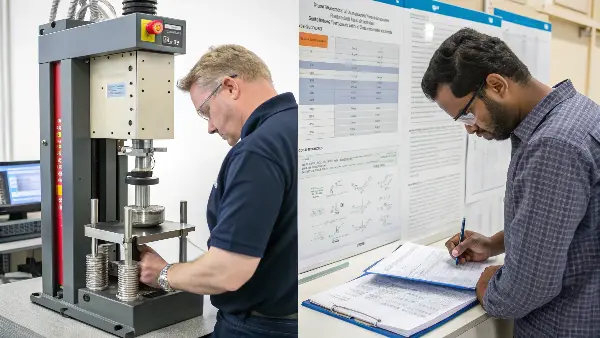
While MFI tells us how to mold the part and ESCR tells us about its chemical durability, tensile and flexural tests tell us about its raw mechanical capability. These tests are performed on a universal testing machine using standardized specimen shapes.
Tensile Test (ASTM D638)
This is the most common mechanical test. A "dog-bone" shaped specimen is pulled apart at a constant rate until it fractures. The test gives us several key values:
- Tensile Strength at Yield/Break: The maximum stress the material can withstand before permanently deforming or breaking. This is critical for parts that carry loads.
- Elongation at Break: How much the material can stretch before it snaps. HDPE is known for its high elongation, indicating excellent ductility and toughness.
- Modulus of Elasticity: A measure of the material’s stiffness. It tells you how much the material will deflect under a given load without permanent deformation.
Flexural Test (ASTM D790)
Here, a simple beam of HDPE is placed on two supports and a load is applied to its center. This simulates a bending force. The main output is the Flexural Modulus, which is another measure of stiffness. For many applications, like shelving or support beams, a part’s resistance to bending is more relevant than its resistance to being pulled apart.
The real key is understanding that these are ideal-condition tests. A real-world injection molded part is not a perfect, uniform specimen. It has weld lines where melt fronts meet, internal stresses from cooling, and its polymer chains are oriented based on how the material flowed into the mold. This is why our experience as mold makers is so important. We can look at a part design and a material’s properties and anticipate potential weak spots. For example, a weld line in a high-stress area can reduce the actual tensile strength to just 30-60% of the datasheet value. That’s why we always analyze the part design in conjunction with the material data to ensure success.
Does Vicat Softening Temperature Tell the Whole Story About Heat Resistance?
You’ve selected an HDPE part for a warm environment, checking that the Vicat softening temperature is above your service temperature. However, the parts are warping and deforming under a light load. This happens because Vicat only measures surface softening, not the structural integrity of the part under heat and load.
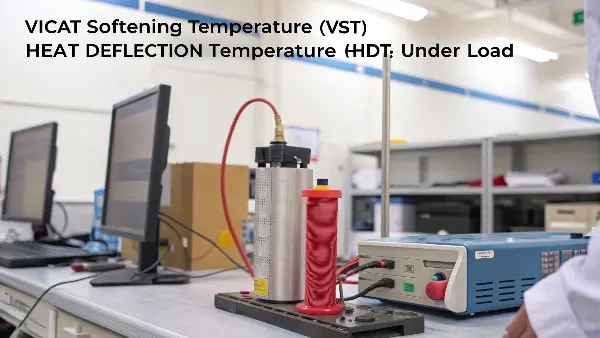
No, Vicat softening temperature (VST) does not tell the whole story. VST (ASTM D1525) only indicates the temperature at which a needle can penetrate the surface. A more useful test is the Heat Deflection Temperature (HDT) under load (ASTM D648), which measures the temperature at which a part deforms under a specific load. HDT provides a much better real-world indication of a part’s structural stability at elevated temperatures.
Diving Deeper into Thermal Properties
Understanding how a polymer behaves with heat is crucial for any part that won’t be living at room temperature. For HDPE, two key tests help us predict this behavior, but they measure very different things.
Vicat Softening Temperature (VST)
In the VST test, a flat specimen is heated at a uniform rate. A weighted, circular needle rests on its surface. The Vicat temperature is the point at which the needle penetrates 1 mm into the plastic. It’s essentially a measure of when the surface of the material begins to lose its hardness. It’s a quick and easy quality control check, but it has limited value for predicting structural performance. It doesn’t account for how the part will behave under any kind of mechanical stress.
Heat Deflection Temperature (HDT)
The HDT test is far more practical for design engineers. In this test, a standard rectangular bar of the material is placed under a flexural load (a bending stress) of either 0.455 MPa or 1.82 MPa. The sample is then heated, and the HDT is the temperature at which the bar deflects by a specified amount (0.25 mm). This test answers a more important question: "At what temperature will my part start to sag under its own weight or a light external load?"
Here’s a comparison:
| Test | What It Measures | Practical Relevance |
|---|---|---|
| Vicat (VST) | Temperature at which the surface becomes soft. | Quick QC check. Useful for non-load-bearing applications. |
| HDT | Temperature at which the part deforms under a load. | Essential for designing any structural part for hot environments. |
Because HDPE is a semi-crystalline material, it doesn’t have a sharp melting point like ice. It softens over a range of temperatures. Its HDT is typically quite low, often below the boiling point of water, which limits its use in load-bearing applications at elevated temperatures. I once reviewed a failed design for a set of dishwasher-safe food containers. The designer had only checked the Vicat temperature. While the containers didn’t melt in the dishwasher, the heat and the weight of other items caused them to warp badly after just a few cycles because their HDT was too low. Choosing a material with the right HDT is a simple check that prevents these kinds of failures.
How Can Impact Strength Testing Prevent Unexpected Product Failures?
Your HDPE product passes all static strength tests with flying colors, but customers complain that it shatters when dropped or hit. This is a classic failure mode where the material lacks toughness, or the ability to absorb sudden energy. Static tests like tensile strength don’t predict this behavior.
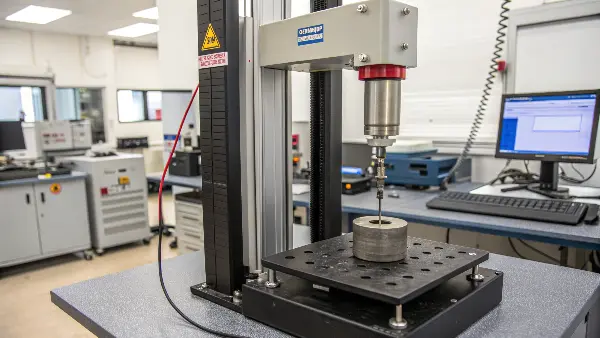
Impact strength testing prevents failures by measuring an HDPE part’s ability to resist sudden, high-velocity loads. We use standardized tests like Izod (ASTM D256) or Charpy (ASTM D6110), where a weighted pendulum strikes a notched specimen. The energy absorbed by the specimen before it breaks is its impact strength. This data is crucial for designing durable parts like containers, helmets, or protective housings that will experience drops and impacts in their lifetime.
Diving Deeper into Impact Resistance
Toughness is not the same as strength. A material can be very strong (high tensile strength) but also very brittle (low impact strength), like glass. HDPE is renowned for its excellent toughness, especially at low temperatures, but this property must be verified. This is where impact testing comes in.
Izod vs. Charpy Impact Tests
Both tests work on the same principle: hit a specimen with a pendulum and measure the energy absorbed. The main differences are how the specimen is held and where it’s struck.
- Izod Impact Test (ASTM D256): The specimen is clamped vertically, like a cantilever beam. The pendulum strikes the top half of the specimen. The notch, which creates a stress concentration point to ensure a clean break, faces the pendulum. This is the most common impact test in the United States.
- Charpy Impact Test (ASTM D6110): The specimen is supported horizontally at both ends, like a simple beam. The pendulum strikes the specimen in the middle, opposite the notch. This test is more common in Europe.
The results from Izod and Charpy tests are not directly comparable, so it’s important to be consistent and know which standard you are using. The results are typically reported in energy per unit of thickness (e.g., J/m or ft-lb/in).
A higher impact strength value means the material is tougher and can absorb more energy before fracturing. This is a critical property for countless applications. Think about a 5-gallon bucket, a children’s toy, or the bumper on a piece of machinery. Their primary job is often to survive being dropped, hit, or banged around. I remember working on a project for industrial safety helmets. The design was sleek, but the initial material choice, while strong, had only moderate impact strength. Our initial drop tests showed cracking. We collaborated with the client to switch to a high-molecular-weight HDPE grade specifically designed for high impact resistance. The new material passed all tests with ease. It’s a perfect example of how focusing only on static strength can lead you down the wrong path. Verifying impact strength is your insurance policy against brittle failure.
Conclusion
Properly testing HDPE isn’t just about ticking boxes on a spec sheet. It’s about deeply understanding how the material will perform in the real world. By methodically checking MFI, ESCR, mechanical strength, thermal properties, and impact resistance, you can build reliable, high-quality parts and master your molding projects.