
Struggling to choose the right polyethylene for your project? Picking the wrong one can lead to part failure, budget overruns, and production delays. Making the right choice from the start ensures your product performs exactly as intended, saving you time and money.
High-Density Polyethylene (HDPE) is rigid and durable, Low-Density Polyethylene (LDPE) is soft and flexible, and Linear Low-Density Polyethylene (LLDPE) offers a balance of strength and flexibility. Your best choice depends entirely on the product’s required stiffness, impact resistance, and chemical durability. HDPE is for structure, LDPE is for flexibility, and LLDPE is for tough, thin-walled applications.
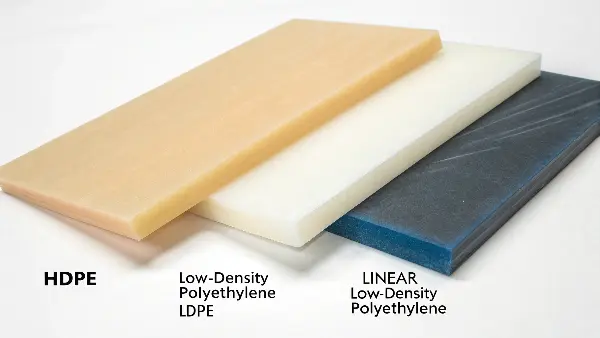
Over my years in mold making, I’ve seen countless projects succeed or fail based on one early decision: material selection. It’s a choice that impacts everything from mold design to the final product’s feel and function. For project managers like Alex, getting this right is non-negotiable. The world of polyethylene plastics—specifically HDPE, LDPE, and LLDPE—can seem confusing, but understanding their core differences is the first step to mastering your molding process. Let’s break it down together, so you can make your next material choice with confidence.
What are the core differences between HDPE, LDPE, and LLDPE?
Choosing between these plastics feels like a puzzle. They are all "polyethylene," yet they behave so differently. If you pick one that’s too rigid or too soft, your part won’t function correctly. This is a common challenge that can seriously impact your project’s outcome.
The main difference lies in their molecular structure. HDPE has a linear structure, making it dense and rigid. LDPE has a branched structure, making it less dense and more flexible. LLDPE has short, uniform branches, giving it higher tensile strength and puncture resistance than LDPE while maintaining flexibility. This structural difference dictates their physical properties and best uses.
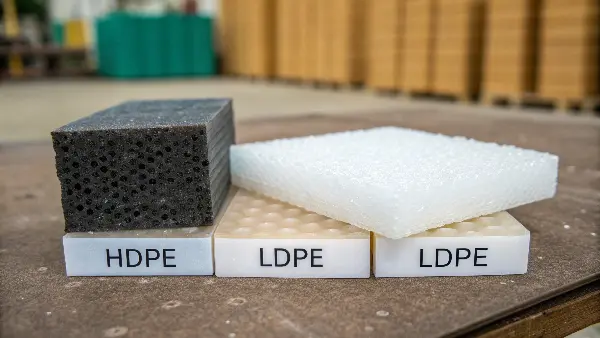
To really get a handle on this, you need to look beyond the names and see how their internal makeup affects performance. As a mold maker, I see the direct results of these differences every day. A material that’s perfect for a rigid container will completely fail if used for a flexible lid. Let’s dive deeper into what makes each of these materials unique so that you can match the right plastic to your specific needs. It all comes down to the arrangement of their molecules.
Unpacking the Molecular Structures
The names "high-density" and "low-density" give you the first clue. HDPE’s molecules are packed tightly in straight lines, almost like perfectly stacked logs. This tight packing is what gives it high density and, as a result, high rigidity and strength. Think of it as the strong backbone material. In contrast, LDPE’s molecular chains have long, irregular branches, like a tree with limbs going in all directions. These branches prevent the molecules from packing closely together, resulting in lower density, which translates to softness and flexibility.
LLDPE: The Best of Both Worlds?
LLDPE is the interesting middle ground. Its molecular chains are also linear, but they have short, consistent branches. This structure allows it to have better tensile strength and puncture resistance than LDPE. It can be stretched more before it breaks, making it incredibly tough. We often use it for films and flexible parts that need to withstand rough handling. To make it easier to compare, here is a simple table:
| Property | High-Density (HDPE) | Low-Density (LDPE) | Linear Low-Density (LLDPE) |
|---|---|---|---|
| Structure | Linear, unbranched | Highly branched | Linear with short branches |
| Density | High | Low | Low to Medium |
| Rigidity | High | Low | Low to Medium |
| Tensile Strength | High | Low | High |
| Flexibility | Low | High | High |
| Impact Strength | Good | Excellent | Superior |
Understanding these fundamentals helps you and your team make smarter, more informed decisions from the very beginning of the design process.
Is HDPE a good choice for injection molding?
You have a part that needs to be strong, rigid, and affordable. You’re considering HDPE, but you’re worried if it will process well in an injection mold. If the material warps or doesn’t fill the mold correctly, you’ll be left with a pile of useless parts.
Yes, HDPE is an excellent material for injection molding. Its good flow properties allow it to fill complex mold cavities efficiently, and its predictable shrinkage rate makes it reliable for producing dimensionally stable parts. Its inherent strength, chemical resistance, and cost-effectiveness make it a go-to choice for a wide range of durable goods, from industrial containers to household products.
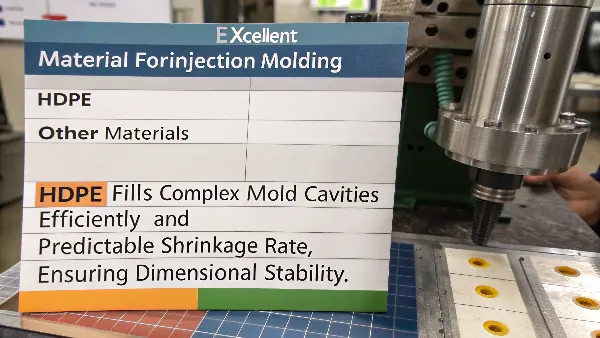
I’ve worked on hundreds of molds designed specifically for HDPE. It’s a workhorse material in our industry for a reason. Its reliability during the molding process is a huge advantage for keeping projects on schedule and within budget. For a project manager like Alex, who needs to guarantee part quality and repeatability, HDPE is often one of the safest and most practical choices. However, there are a few key processing details and design considerations you need to be aware of to ensure success. Let’s look at what makes HDPE so suitable and what you need to watch out for.
Processing Advantages of HDPE
When we talk about injection molding, melt flow is critical. HDPE has a great melt flow index (MFI), which means it flows easily when melted. This allows it to fill even large, intricate molds without requiring excessively high injection pressures. Lower pressure means less stress on the mold and the machine, which contributes to a longer tool life—a big plus for cost control. Another key aspect is its thermal stability. HDPE can handle a relatively wide processing window without degrading, giving machine operators more leeway to dial in the perfect settings for optimal cycle times and part quality.
Design Considerations for HDPE Molds
While HDPE is straightforward to mold, it does have a higher shrinkage rate compared to some other plastics. This is a crucial factor that we must account for during the mold design phase. At CavityMold, we precisely calculate and build this shrinkage into the tool dimensions to ensure the final cooled part meets your exact specifications. Uniform wall thickness is also important to prevent warpage. We always advise clients to avoid sharp corners and design parts with smooth transitions and radii, which helps the material flow evenly and reduces internal stresses. For structural parts, incorporating ribs can add significant strength without making the walls thicker, saving material and reducing cycle time. By keeping these principles in mind, we can leverage HDPE’s strengths to create robust, high-quality, and cost-effective parts.
Can you use LDPE for injection molding?
Your product requires a soft, flexible feel, like a squeeze bottle cap or a snap-on lid. You know LDPE has the right properties, but you’ve heard it can be tricky to injection mold. You’re concerned about issues like stringing or parts sticking in the mold.
Absolutely. LDPE is commonly used for injection molding, especially for applications requiring flexibility and toughness. While its lower viscosity and higher shrinkage can present challenges, they are easily managed with proper mold design and process control. An experienced molder will use optimized cooling channels and precise temperature settings to ensure clean part ejection and consistent quality.
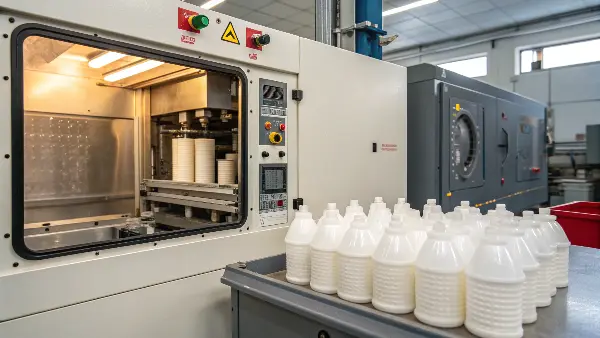
We’ve molded millions of LDPE parts over the years, from simple plugs to complex living hinges. The key is in the setup. It’s not as "point-and-shoot" as HDPE, but when you know its behavior, you can produce excellent, high-quality flexible parts repeatably. For a project manager focused on performance, the unique benefits of LDPE are well worth the small adjustments needed in the molding process. It’s all about understanding how to work with the material, not against it.
Mastering the LDPE Molding Process
The biggest challenge with LDPE is its low viscosity—it flows like water compared to stiffer plastics. This can lead to "flash," where excess material seeps out of the mold’s parting line. To prevent this, the mold’s two halves must clamp together with perfect alignment and sufficient force. We ensure our molds have precision-machined surfaces to create a tight seal. Temperature control is also vital. LDPE is sensitive to heat, and if the nozzle temperature is too high, it can lead to "drooling" or stringing as the mold opens. We use precise temperature controllers on our machines to keep the melt at the optimal consistency.
Mold Design for Flexible Parts
Designing a mold for a flexible material like LDPE requires a different approach than for a rigid one. Ejection is a primary concern. Because the parts are soft, standard ejector pins can push through or mark the surface. To avoid this, we often use "stripper plates," which provide a large, even surface to push the part out of the cavity gently. This ensures a clean, mark-free ejection every time. Cooling is also more critical. LDPE’s high shrinkage rate must be managed with a well-designed cooling system in the mold. By running coolant through channels close to the part cavity, we can solidify the part quickly and uniformly, minimizing warpage and reducing cycle times. These are the details that separate a frustrating molding experience from a smooth, efficient production run.
What are the common applications for HDPE, LDPE, and LLDPE?
You understand the technical differences, but how do they translate to real-world products? Seeing where each material is used helps connect the data to practical decisions. Without this context, you might choose a material that is technically sufficient but not ideal for your market.
HDPE is used for rigid, durable products like industrial containers, bottle caps, and pipes. LDPE is chosen for its flexibility in products like squeeze bottles, flexible lids, and plastic bags. LLDPE shines in applications needing superior toughness and puncture resistance, such as heavy-duty films, liners for tanks, and durable toys that can withstand impact.
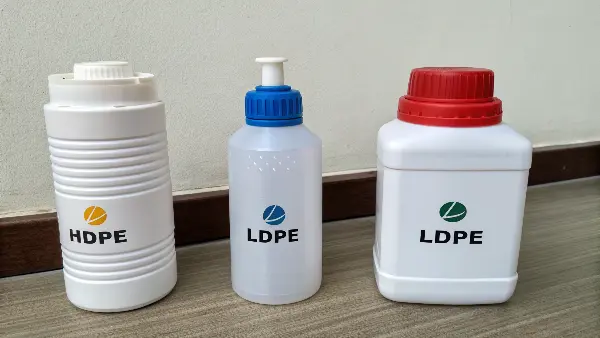
Walking through a store, you’re surrounded by these three plastics. I often point them out to new engineers to help them build an intuitive feel for material selection. The milk jug in your hand? That’s HDPE. The plastic bag holding your groceries? That’s LDPE or LLDPE. This direct connection between material and application is the most powerful tool for any project manager. Seeing where these materials succeed in the market provides a clear blueprint for your own product development. Let’s explore some specific examples.
Everyday Examples You Can Touch
The best way to understand the application is to look at the products you interact with daily.
High-Density Polyethylene (HDPE) Applications
HDPE is all about structure and chemical resistance. Its rigidity makes it perfect for items that need to hold their shape under pressure or contain chemicals without degrading.
- Blow Molded Bottles: Think of milk jugs, shampoo bottles, and detergent containers. They are lightweight yet strong enough to be stacked and handled.
- Injection Molded Crates & Pallets: The material’s durability and impact resistance are essential for logistics and an industrial environment.
- Caps and Closures: The screw cap on a soda bottle is often HDPE because it provides a rigid, reliable seal.
- Cutting Boards: Its non-porous and tough surface is ideal for food preparation.
Low-Density Polyethylene (LDPE) Applications
LDPE is defined by its flexibility and softness. It’s used for products that need to be squeezed, bent, or provide a soft seal.
- Squeeze Bottles: Ketchup and mustard bottles rely on LDPE’s flexibility to dispense their contents.
- Flexible Lids: The snap-on lid for a coffee can or a food container is often LDPE, creating a soft, compliant seal.
- Plastic Film and Bags: Grocery bags and plastic wrap for food are classic examples, though LLDPE is taking over in many film applications due to its superior strength.
Linear Low-Density Polyethylene (LLDPE) Applications
LLDPE is the tough guy. It offers better strength and puncture resistance than LDPE, making it ideal for thin but durable products.
- Stretch Wrap/Pallet Wrap: Its high tensile strength allows it to be stretched tightly around goods to secure them for shipping.
- Durable Toys: Its excellent impact strength makes it a great choice for playground equipment and toys that need to withstand abuse.
- Geomembranes and Liners: Used in landfills and ponds, LLDPE liners provide a durable, puncture-resistant barrier.
Conclusion
Choosing between HDPE, LDPE, and LLDPE comes down to a simple question: what does your product need to do? Match the material’s core properties—HDPE for rigidity, LDPE for flexibility, and LLDPE for toughness—to your application’s demands, and you will set your project up for success.