
Dealing with black specks on high-gloss parts is incredibly frustrating. You want a perfect finish, but these tiny imperfections force you to scrap parts, causing delays and increasing costs. It feels like a never-ending battle to find and eliminate the source of the contamination.
The most effective way to eliminate black specks in high-gloss components is through a systematic approach that addresses contamination at every stage. This involves strict material handling protocols to prevent foreign particles, optimizing molding process parameters to avoid thermal degradation of the plastic, implementing rigorous cleaning schedules for the machine and mold, and designing the mold to eliminate dead spots where material can stagnate and burn.
I’ve been in the molding business for over two decades, and if there’s one defect that can bring a high-volume production line to its knees, it’s black specks. Especially with automotive clients, where a dashboard trim or a center console piece needs to have a Class-A, mirror-like finish. A single speck means a rejected part. We recently worked through this exact challenge with a major automotive supplier, and the lessons we learned were invaluable. It’s not about one magic fix; it’s about building a fortress of prevention. Let’s break down exactly how we did it, starting with understanding the enemy.
What causes black specks in injection molding?
You’re inspecting a fresh batch of parts, and there it is—that tiny black dot mocking your efforts. You thought you had everything dialed in, but the problem persists, disrupting production and causing headaches. What you need is a clear roadmap to the root cause.
Black specks in injection molding are almost always caused by one of three things: thermal degradation of the plastic itself, contamination from foreign particles, or burned material flaking off from equipment. Overheating the resin in the barrel or hot runner creates carbon. Dust or other plastics can enter the material stream. Or old, degraded plastic can hide in the screw and barrel, only to break free later.
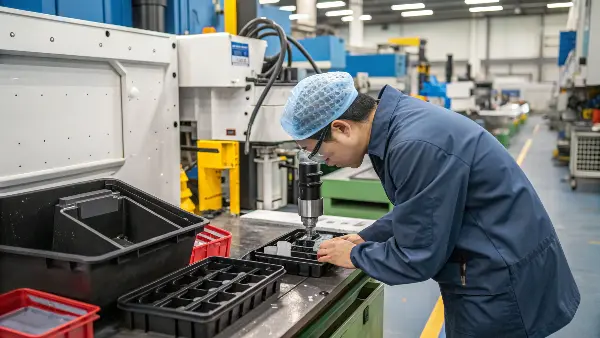
When we started working with our automotive client, their rejection rate for a high-gloss PC/ABS interior trim part was hitting nearly 15% due to black specks. The first thing we did was create a diagnostic team to hunt down the source. We treated it like a crime scene investigation, because every clue matters. The potential culprits fall into a few main categories.
Material Degradation (Carbonization)
This is the most common cause. Plastic has a processing window. If it gets too hot or stays heated for too long, the polymer chains start to break down and literally burn, turning into carbon. This can happen in several places:
- The Barrel: If melt temperatures are set too high, or if the residence time (the time the plastic spends in the barrel) is excessive, the material will degrade.
- The Nozzle: This is a common bottleneck where pressure and temperature are high. Any old material stuck here will quickly carbonize.
- The Hot Runner System: This is a huge area for concern. "Dead spots" or areas with slow material flow within the hot runner manifold can allow material to sit and cook for extended periods.
Contamination
Sometimes, the black speck isn’t even the same material as the part. It’s a foreign invader.
- External Debris: Dust, dirt, cardboard fibers from packaging, or even hair can get into the hopper. This is especially true in facilities that aren’t kept meticulously clean.
- Cross-Material Contamination: If the machine wasn’t cleaned properly after running a different type of plastic (especially a black one), flakes from the previous run can get mixed in. I remember one time we found specks were caused by the operator using the same scoop for a black material and our natural material.
- Contaminated Regrind: If you use regrind (recycled material from runners or bad parts), any contamination on those parts gets ground up and reintroduced into your raw material supply.
The key to solving the problem is to first correctly identify the source. A simple
way to start is to take a sample of the specks and examine them under a microscope. If they smear easily and look like burnt char, it’s likely degradation. If they are sharp, have a distinct shape, or a different melting point, it’s likely contamination.
What are the black dots in plastic?
You’ve pinpointed that the black specks are likely burned material, not outside dirt. But this just leads to another question: what are these dots chemically? Understanding their composition is critical to stopping them from forming in the first place.
The black dots found in plastic parts are typically carbonized deposits. They are the result of the plastic polymer chains breaking down due to excessive heat or prolonged residence time in the machine. Essentially, the plastic has "burned." These dots can also be degraded additives, such as colorants, flame retardants, or lubricants, which have a lower thermal stability than the base resin and carbonize first.
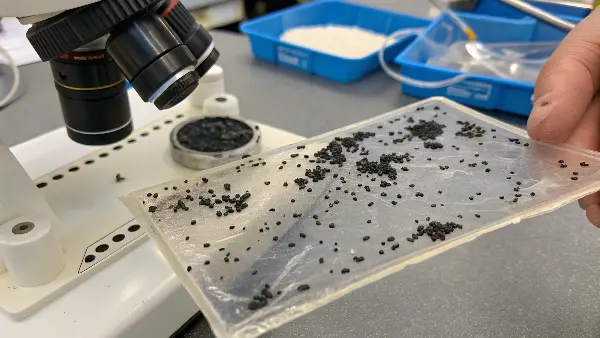
When we analyzed our client’s PC/ABS parts, a lab analysis confirmed the specks were carbon. This told us we weren’t looking for a foreign substance, but rather a problem with our own process. The plastic itself was becoming the enemy. Understanding this is key because it shifts your focus from contamination control (like cleaning the environment) to process control.
The black specks are a form of carbon, just like the char on burnt toast. Polymers are long chains of carbon and hydrogen atoms. When you apply too much energy (heat), these chains vibrate violently and eventually break. This chemical breakdown, known as pyrolysis or thermal degradation, releases volatile gases and leaves behind a carbon-rich residue.
Beyond the Base Resin
It’s not always just the base polymer that burns. A lot of modern plastics are complex formulations with various additives to achieve specific properties.
- Color Concentrates: The carrier resin for a color concentrate might have a lower processing temperature than the main polymer. If your machine temperature is set for the main polymer, you could be burning the color carrier.
- Additives: Things like flame retardants, UV stabilizers, and processing aids can also have lower thermal stability. They might degrade and form black specks even when the base resin is technically within its safe processing window.
Where Carbon Hides
Once formed, this carbon is a real pain. It’s sticky and loves to cling to metal surfaces. Common hiding spots include:
| Hiding Spot | Why Carbon Accumulates Here |
|---|---|
| Screw Flights | Damaged or worn screw surfaces provide a rough texture for carbon to grip. |
| Check Ring / Non-Return Valve | This is a high-shear area with complex geometry, creating spots for material to hang up. |
| Barrel Dead Spots | Any area where plastic flow stagnates allows material to sit and degrade over many cycles. |
| Nozzle Tip and Adapter | Small orifices and threads are perfect traps for degraded material. |
For our client’s project, we realized the long residence time in the hot runner was a major contributor. The material was sitting in certain channels for too long between shots, slowly degrading and then breaking off into the melt flow. Knowing the specks were carbonized PC/ABS, not some external dust, allowed us to focus our efforts on the machine and the process, which is exactly where we found our solution.
What are the black specks in polymers?
You might hear engineers use the term "black specks in polymers" instead of "in plastic." Is there a difference? This might seem like a small detail, but thinking from a material science perspective can help you diagnose more complex issues and prevent them from happening with different materials.
From a material science view, black specks in polymers are localized points of thermal or oxidative degradation. Different polymers have unique sensitivities. For example, PVC degrades easily and releases corrosive gas, while high-temperature polymers like PEEK can form specks if contaminants with lower melt points are present. The specks are a sign that the material’s chemical structure has been compromised.
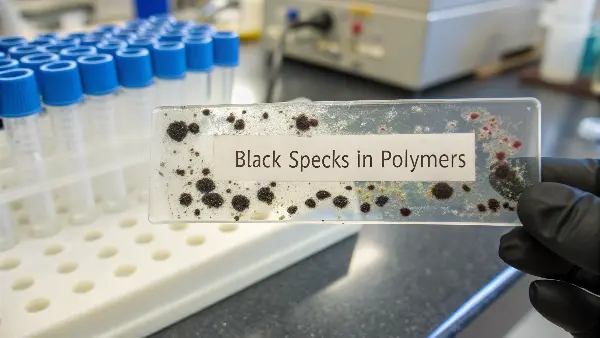
Thinking about "polymers" instead of just "plastic" forces us to consider the specific chemistry of the material we are working with. Not all polymers behave the same way under heat and pressure. For the automotive part, we were using a PC/ABS blend. Both PC (Polycarbonate) and ABS (Acrylonitrile Butadiene Styrene) are amorphous polymers, but they have different characteristics.
- PC (Polycarbonate): It is very sensitive to moisture. If not dried properly, it undergoes hydrolysis at melt temperatures. This weakens the polymer chains and makes them much easier to degrade into carbon specks. This was one of the first things we checked.
- ABS (Acrylonitrile Butadiene Styrene): It is less sensitive to moisture but more susceptible to oxidation at high temperatures. The ‘butadiene’ component, in particular, can degrade and cause yellowing or, in severe cases, black specks.
This is why a one-size-fits-all approach doesn’t work. The solution for preventing specks in PVC will be very different from preventing them in Nylon or PEEK.
Polymer Sensitivity to Degradation
Here’s a simplified look at how some common polymers react:
| Polymer | Typical Processing Temp (°C) | Key Sensitivity |
|---|---|---|
| PVC | 160-200 | Very heat sensitive, degrades quickly, releases HCl gas. |
| POM (Acetal) | 180-220 | Extremely heat sensitive; can "unzip" and degrade rapidly if overheated. |
| PC/ABS | 240-280 | PC is moisture-sensitive (hydrolysis); ABS is oxidation-sensitive. |
| PA (Nylon) | 260-290 | Prone to oxidation and requires proper drying. |
| PEEK | 360-400 | Very stable, but any lower-temp contamination will instantly carbonize. |
Understanding this helped us fine-tune our process. We knew our PC/ABS blend needed meticulous drying to protect the PC component, and we had to be careful not to introduce too much shear heat, which could oxidize the ABS component. We also reviewed the material’s technical data sheet (TDS). The TDS often provides crucial information on the maximum recommended melt temperature and residence time. Ignoring this information is a common path to creating black specks. It’s like a recipe: if the oven is too hot, you burn the cake. With polymers, if the barrel is too hot, you get carbon.
So, how do you control black dots in injection molding?
This is the most important question. You’ve identified the causes and understand the science behind them. Now, how do you put a stop to it? It’s tempting to look for a single, easy fix, but the real solution is a comprehensive, disciplined process.
Controlling black dots requires a multi-faceted strategy. First, implement strict material handling and drying protocols. Second, establish a rigorous screw and barrel cleaning routine. Third, optimize molding process parameters to minimize residence time and shear heat. Finally, analyze and modify the mold and hot runner design to eliminate any areas where material can stagnate and degrade.
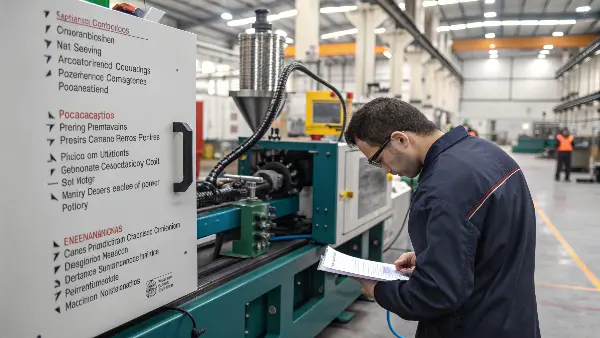
This is the exact strategy we used to solve our client’s 15% scrap rate problem. We broke it down into four action areas and addressed each one systematically. This wasn’t a quick fix; it took collaborative effort over several weeks, but the results were permanent.
Step 1: Material and Environmental Control
We started at the beginning of the process.
- Sealed Material Handling: We helped the client switch from open-bin material transport to a closed-loop vacuum loading system. This immediately stopped airborne dust and other contaminants from getting into the resin before it even reached the machine.
- Drying Verification: We didn’t just trust the dryer settings. We used a dew point meter to verify the air going into the drying hopper was actually as dry as it needed to be for PC. We found one of their dryers needed desiccant replacement.
Step 2: Aggressive Machine Cleaning
You can’t get clean parts from a dirty machine.
- Purging Protocol: We introduced a more effective purging compound and a new procedure. Instead of just running a few shots of purge, we trained operators to perform a multi-stage purge, using a mechanical (scrubbing) purge followed by a chemical purge at a lower temperature to dislodge and dissolve carbon buildup.
- Screw Pull and Manual Clean: For machines that were chronic offenders, we scheduled a full screw pull. Manually cleaning the screw, check ring, and nozzle is the only way to be 100% sure you’ve removed all baked-on carbon. It’s labor-intensive, but a necessary reset.
Step 3: Process Optimization
Here, we focused on preventing new carbon from forming.
- Residence Time Study: We calculated the total shot weight versus the barrel capacity. On some machines, the shot was too small for the barrel, leading to excessively long residence times. Where possible, we moved the mold to a machine with a smaller barrel.
- Temperature Profile: We adjusted the barrel temperature profile. Instead of a constantly increasing temperature, we used a regressive profile (cooler at the nozzle) to reduce the risk of burning the material right before injection. We also reduced back pressure to a minimum, as high back pressure adds significant shear heat.
Step 4: Mold & Hot Runner Analysis
Finally, we looked at the mold itself. Using mold flow analysis, we identified two "dead spots" in the hot runner manifold where the melt flow was very slow. Material was sitting in these spots, cooking, and then flaking off into the main flow. We worked with the toolmaker to modify the manifold, smoothing out the flow paths and eliminating these stagnation areas. This was the final piece of the puzzle. By combining all four steps, we didn’t just reduce the black specks; we eliminated them. The scrap rate dropped from 15% to less than 1%.
Conclusion
Eliminating black specks in high-gloss components is not a simple task, but it is achievable with a systematic and disciplined approach. By focusing on material purity, machine cleanliness, process optimization, and intelligent tool design, we transformed a high-scrap nightmare into a stable, high-quality production process for our client.