
High-performance ABS injection molding requires the selected grade, controlled drying, balanced mold design, stable temperature control, and evidence-based inspection. ABS is not a single process recipe: impact, gloss, color, flow, heat requirements, and grade additives change the molding window.
Control the material before molding
- Confirm the exact ABS grade, color, lot, additive package, and service requirements from the data sheet.
- Dry hygroscopic ABS using the resin supplier’s instructions and protect dried pellets from moisture pickup.
- Keep regrind and colorant decisions controlled, traceable, and compatible with the approved application.
Match part and mold design
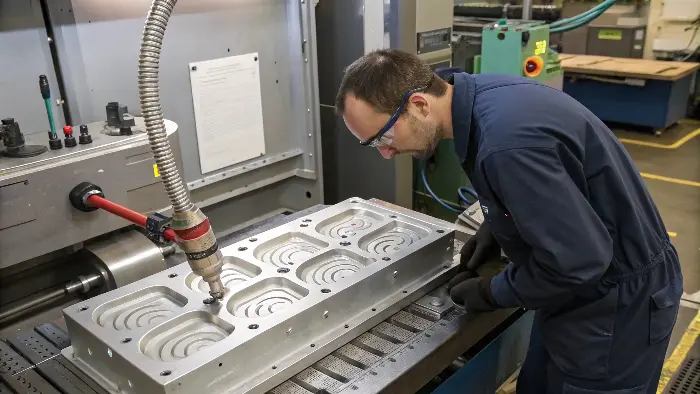
- Review wall uniformity, ribs, bosses, draft, radii, gates, weld lines, vents, ejection, and cooling.
- Set cosmetic surfaces and texture with the parting line and ejection strategy in mind.
- Check machine fit, shot size, clamp capacity, screw condition, and temperature measurement before trials.
Build a stable process window
Establish filling, packing, cooling, mold temperature, cushion, screw recovery, and residence-time limits through trials. Inspect appearance, dimensions, fit, gloss, color, and impact-related requirements. Use cavity and lot identification so a defect can be traced to material, mold, machine, process, design, or handling instead of being hidden by a setting change.
Plan the next step
Share your part, resin, annual volume, critical dimensions, finish, and timing with the Cavity Mold team through our contact page. We can review the manufacturing risks and recommend a practical next step.
Related Cavity Mold resources
- Injection mold engineering services
- Plastic injection molding services
- Injection mold making services
- Contact Cavity Mold
Technical references
- Autodesk Moldflow ABS material guidance
- ELIX ABS injection moulding guidelines
- Protolabs injection molding quality control
Keep ABS process variables connected
ABS parts are sensitive to the relationship between material condition, thermal history, fill pattern, packing, cooling, and part restraint. Tune a process against the selected grade and geometry, not a copied machine recipe.
| Decision | What to check | Boundary |
|---|---|---|
| Material state | Confirm grade, color, additives, lot, drying need, and residence-time limit. | Use the supplier processing guide and record the actual setup. |
| Filling | Review gate, venting, flow length, weld-line location, and injection profile. | A cosmetic or structural defect may begin with the flow path. |
| Packing and cooling | Check sink, shrinkage, warpage, ejection, and mold-temperature balance. | Separate part design, mold, and process contributors before changing settings. |
| Inspection | Define dimensions, appearance, assembly fit, and sample temperature. | Use the same method when comparing trials. |
ABS control sequence
- Start from the approved ABS grade and part revision.
- Map each defect to a material, mold, machine, or measurement hypothesis.
- Change one controlled variable at a time where practical.
- Save the accepted window and the reason it is accepted.
Bring the grade and CTQs to engineering and include the material assumptions in the ABS RFQ.