
Choosing injection molding, CNC machining, or 3D printing depends on volume, geometry, tolerances, material, lead time, surface finish, and total cost. The best process can change as the product moves from concept to pilot and production.
How the processes differ
- 3D printing: fast design iteration, complex internal geometry, low initial tooling cost, and useful prototypes or low-volume parts; material, anisotropy, finish, and production rate must be checked.
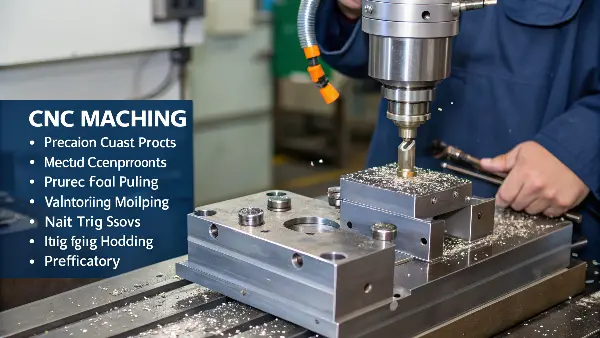
- CNC machining: real engineering materials, strong dimensional control, and no injection mold; material removal, fixturing, tool access, and part cost may limit complex or high-volume production.
- Injection molding: high repeatability and low variable cost at suitable volume, with an upfront mold, design release, trial, and maintenance commitment.
Use a process-selection matrix
- Define annual and launch volume, demand confidence, and required ramp speed.
- List material, mechanical, thermal, chemical, cosmetic, and regulatory requirements.
- Set critical dimensions, surface finish, assembly, and inspection method.
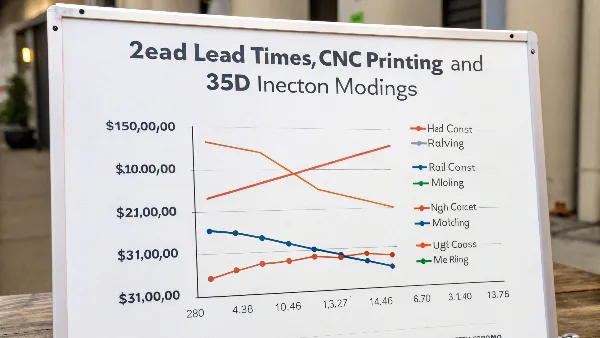
- Compare tooling, unit cost, scrap, post-processing, lead time, inventory, and change cost.
- Consider a bridge: prototype with additive or CNC, validate with pilot tooling, then scale to production molding.
Do not compare only unit price
Include design changes, fixtures, programming, mold maintenance, packaging, logistics, and the cost of a late process switch. A small batch may favor CNC or 3D printing, while stable high volume may justify injection molding.
Plan the next step
Share your part, resin, annual volume, critical dimensions, finish, and timing with the Cavity Mold team through our contact page. We can review the manufacturing risks and recommend a practical next step.
Related Cavity Mold resources
- Plastic injection molding services
- Injection mold engineering services
- Injection mold making services
- Contact Cavity Mold
Technical references
Choose the process for the decision you need next
Process selection should follow the next question the product must answer. A prototype may need fast geometry learning, a pilot may need representative material, and production may need repeatable cost and capacity.
| Decision point | Check | Evidence or boundary |
|---|---|---|
| Fit and early geometry | Consider 3D printing or CNC based on functional material needs. | Record assembly, handling, material, and design-change learning. |
| Representative pilot | Consider bridge tooling, CNC, or a limited mold route. | Compare real resin, surface, tolerance, and inspection questions. |
| Repeatable production | Consider injection molding when volume and geometry justify tooling. | Compare investment, unit economics, capability, and maintenance. |
| Change risk | Ask how often geometry, material, or interface may move. | Do not lock a production route before the learning gate is clear. |
Record the handoff criteria
- State what the current route can prove.
- Identify changes that would invalidate the next process.
- Compare total learning cost, not only first-piece cost.
- Move to the molding route when design and demand justify a tool.
An engineering review keeps route choice tied to the part rather than a preferred technology.