
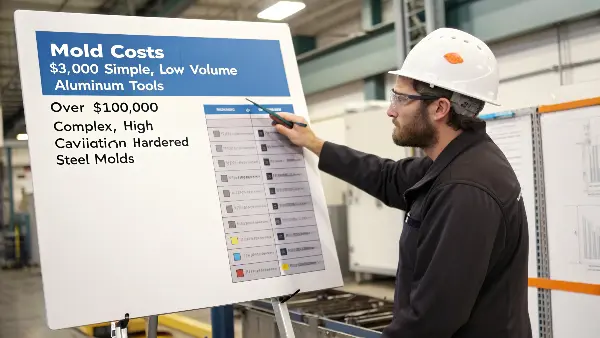
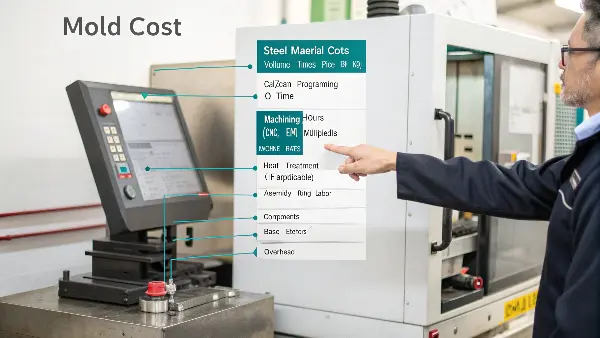
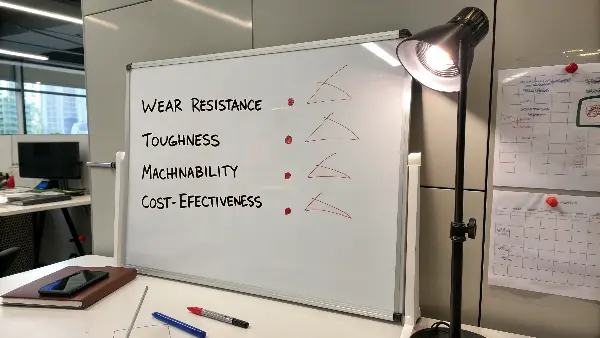
Mold steel selection affects both initial cost and long-term value through wear, corrosion, surface finish, maintenance, repairability, and production reliability. The right choice is not the most expensive grade; it is the grade and treatment that control the actual risk in the tool.
Map the steel decision to service conditions
- Estimate volume, shots, service intervals, spare parts, and the cost of an unplanned repair.
- Check resin abrasiveness, glass or mineral content, corrosive additives, flame retardants, temperature, and moisture.
- Define polish, texture, optical appearance, weld-line sensitivity, and dimensional stability.
- Review thin inserts, slides, shutoffs, ejectors, impact, welding, and repair access.
- Include machinability, heat treatment, distortion control, inspection, and surface processing.
Compare value, not only purchase price
A pre-hardened steel may be suitable for a general-purpose tool, while corrosion, polish, wear, volume, or mechanism risk may justify a stainless, specialty, or hardened option. Compare expected maintenance, replacement inserts, downtime, correction risk, and the consequence of surface or dimensional failure.
Specify evidence
Request steel standard, hardness range, certificates where required, heat-treatment records, insert map, machining assumptions, and repair plan. Do not promise a fixed tool life from a grade name alone; tie the recommendation to resin, volume, part requirements, and maintenance.
Plan the next step
Share your part, resin, annual volume, critical dimensions, finish, and timing with the Cavity Mold team through our contact page. We can review the manufacturing risks and recommend a practical next step.
Related Cavity Mold resources
- Injection mold making services
- Injection mold engineering services
- Plastic injection molding services
- Contact Cavity Mold